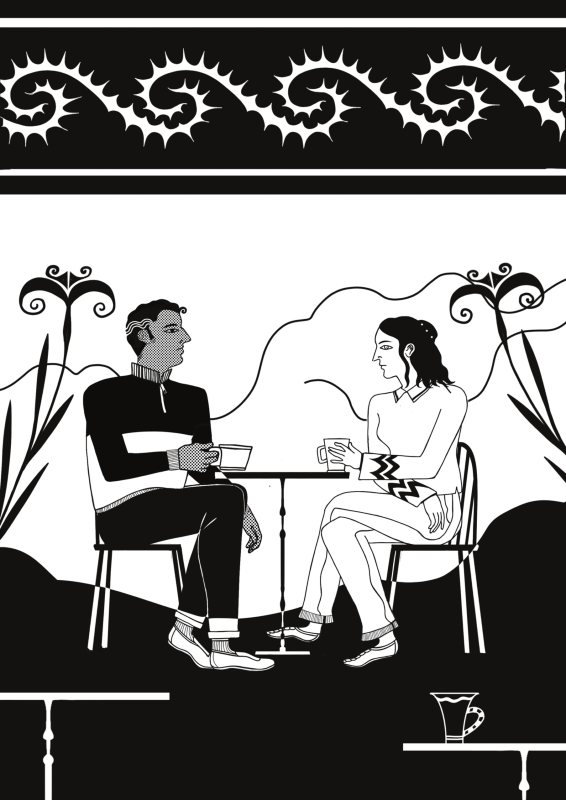
A whirlwind of vivid imagery. Relatable, well-rounded characters that feel like close friends. Mysterious but not to the point of utter confusion. Minoan magic seamlessly woven throughout the pages. Like the story itself, the striking artwork for every chapter (by Lydia Hall) merges ancient times with the modern day through its Minoan-fresco-inspired art depicting contemporary scenes.
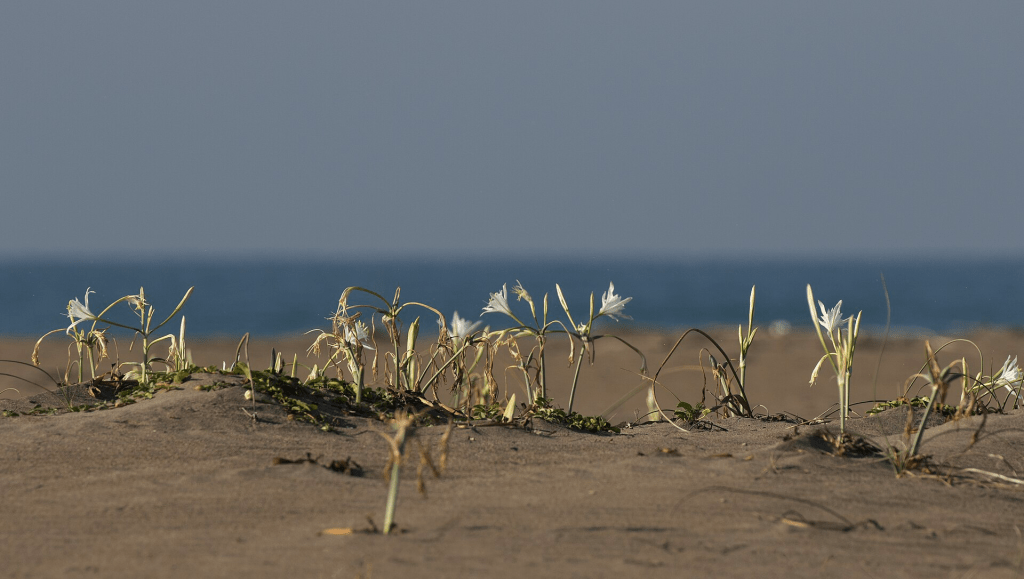
Flower Gatherers is an anthophile’s (and Minoan enthusiast’s) dream book, quite frankly. Those who have been reading my articles throughout the years know how much I love flowers (specifically the flora of Crete like the saffron crocus). Each chapter title even features the scientific name of a flower or plant! Let’s just say I got very excited when Pancratium maritimum was mentioned, which is the sea daffodil/lily (also called the “lily of Knossos”) that has inspired some of my Minoan poetry like this one.
Every night before bed as I read this, only a dim book light illuminating the room, I felt like I was teleported. I’ve set foot in modern Crete plenty of times and have seen the ancients sites up close and personal. Reading this book felt like the next best thing due to Lorna’s exquisitely immersive writing style with the most uncanny details. Fiction books inspired by Minoan civilization are hard to come by, and I’m beyond grateful I stumbled upon this while looking through the Minoan tag on WordPress.
If I had to give it a star rating, I wouldn’t. Instead, I’d give it 5 rodakes (ρόδακες: rosettes)!
❁❁❁❁❁
A photo of sea daffodils by Zeynel Cebeci
𓆸The Premise
by Lydia Hall
To give you a quick gist without giving too much away: In modern-day England, a passionate researcher (who happens to also be an anthophile and a bit of a hermit like yours truly) discovers perplexing engravings that change the understanding of Minoan civilization as we know it. Then, miles and millennia way, there’s a young girl on the island of Crete. She is passionate too (about flowers especially, but in a different way) and makes a pivotal decision that shapes her life in ways she couldn’t possibly anticipate. This compelling book contains two distinct yet seamlessly intertwined stories, and that’s what sets it apart. Magical realism at its finest!
𓆸Author Bio
Lorna studied Classics at Lady Margaret Hall, Oxford University; after a chance encounter with a Gabriel Garcia Marquez novel in her finals year, she became curious about the similarities between it and Ovid, and eventually received a doctorate from University College London on ‘Magical Realism in Ovid’s Metamorphoses’ in 2005.
She created The Iris Project and Iris magazine to promote Classics in state schools in 2006, and runs Latin and Greek projects in state schools across the UK. She has also worked with UCL Bloomsbury Theatre and The Scoop on ancient drama projects, and she set up ‘Latin in the Parks’ for adults to have a go at picking up Latin. She created and runs the East Oxford Community Classics Centre, which opened in October 2013, and the Rumble Museum, the first museum in a state school. It was awarded Arts Council Accreditation in March 2020.
She has written a book “Ovid and Gabriel Garcia Marquez”, and has also written the Latin course Telling Tales in Latin and part two, Distant Lands, which introduces Latin through the stories of Ovid. She has also written Telling Tales in Greek, introducing ancient Greek through the stories of Homer. Her latest book, Telling Tales in Nature: Underworld Tales, explores plants and the myths around them through new voices and perspectives.
She lives in Barton, Oxford, with her husband and teenage daughter, and enjoys nature, reading, music, spending time with her ‘urban family’ of friends, and imagining the future!
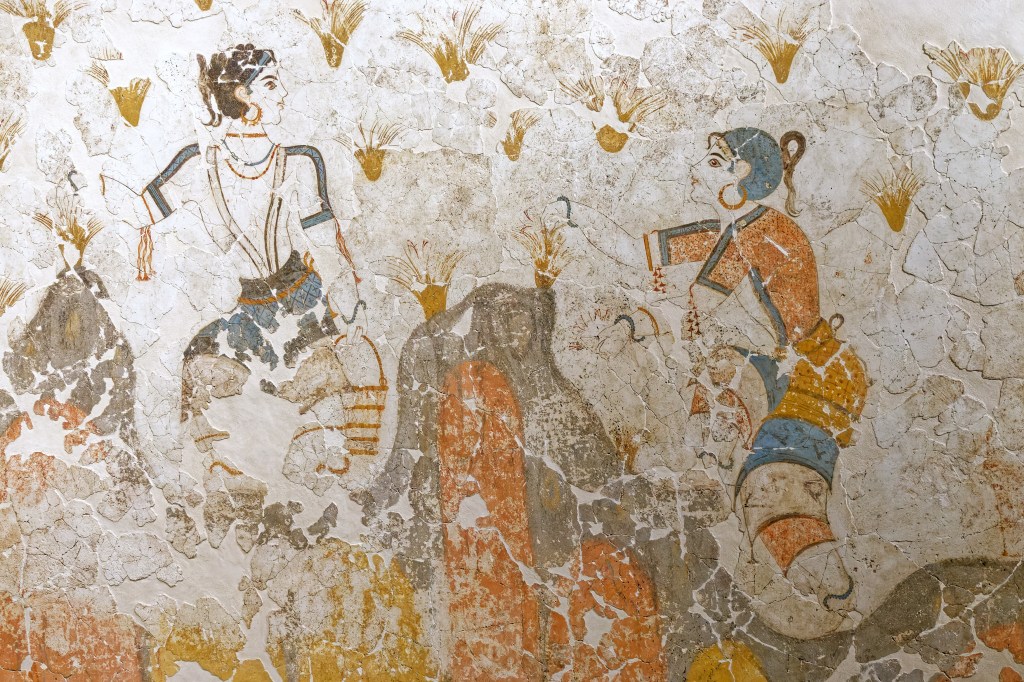
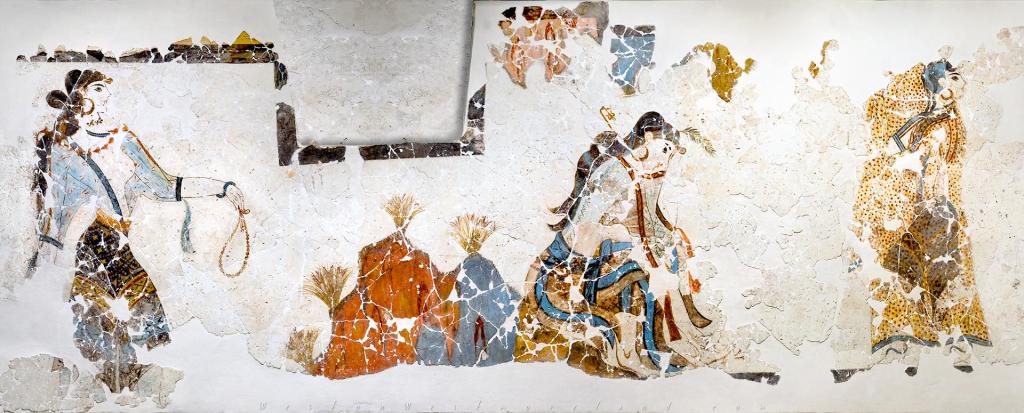
Cultivated on the island of Crete as early as the Middle Minoan Period (2,100 to 1,600 BCE), the saffron crocus (the precursor to Crocus cartwrightianus) has been an integral flower to the Minoans and Modern Cretans alike. It has been depicted in frescos (i.e. “Saffron Gatherers”) and ceramics, used in cosmetics and perfumes, utilized as a spice and medicinal, and was a prevalent colorant in general.
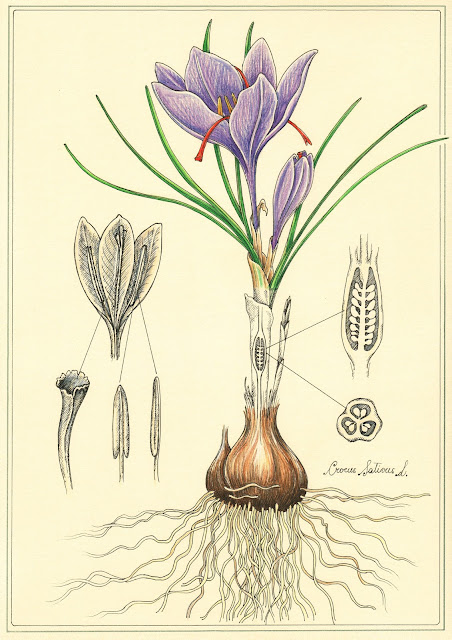
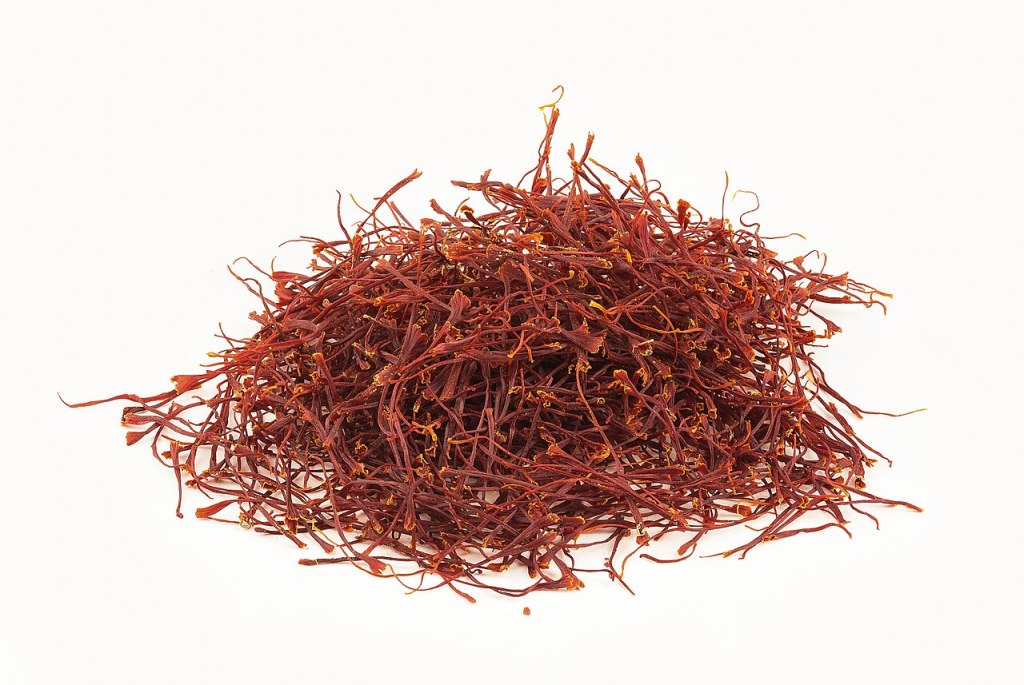
But before we dive any deeper, it’s important to note that saffron is derived from the saffron crocus itself. More specifically, the spice (saffron) consists of the reddish-orange threadlike structures of the flower called stigmas. Crocus sativus is actually the only Crocus species that yields saffron.
Key Traits of Saffron Crocus
The saffron crocus is related to the iris and is considered an autumn-blooming crocus (late September to early October). It is also characterized as a cormous perennial, meaning that it grows from a tuber/bulb like a tulip and returns year after year.
Crocus sativus can grow to be 30 centimeters high. As mentioned, it develops as a bulb underground which in turn produces leaves, bracts, bracteole, and the flowering stalk. Its blooms tend to be a deep purple and have six petals and three stigmas. Its leaves are rosulate (arranged in the form of a rosette; a cluster of grasslike leaves radiating from a central point).
With the flower only producing three stigmas, it’s safe to say it takes a large volume of flowers to yield a small amount of saffron (we’re talking up to 75,000 individual plants in order to produce one pound of saffron), thus making it the most valuable spice of the ancient and modern worlds. Harvesting was indeed labor-intensive but also ritualistic to the Minoans. In fact, it continues to be culturally significant in Greece, with non-mechanical saffron cultivation remaining a tradition throughout the country, especially in Crete.
The medicinal component of saffron stems from its concentration of potent carotenoids (antioxidants crocin and crocetin).
Saffron’s Striking Golden Yellow Shade
Saffron dye is vibrant yellow to orange. It is water-soluble with a high tinctorial strength, meaning its vivid color in small amounts goes a long way. This striking color comes from the carotenoid compound crocin, which makes it particularly resilient to sunlight.
In addition to frescoes, ceramics and makeup, the dye has been used in fabrics, and signified prestige and elegance.
A Flower Beyond a Mere Commodity
Saffron served as a cornstone of culture and identity for Minoan women in particular. In virtually every scene of saffron crocuses, solely women have been depicted. This leads scholars to posit that saffron was a gynecological remedy (among others) that was used by midwives and female healers alike. One such scene is featured in the “Adorants Fresco” (see above) that originally adorned the walls surrounding a ceremonial basin. Along the north wall, three women are shown headed toward a shrine on the east wall. Crocuses and saffron stigmas make appearances on the vibrant garments of all three: the older woman to the left walking towards the shrine wears a blue blouse decorated with crocus flowers and a garland of crocus stigmas around her neck and shoulders, the seated woman in the middle wears a belt embellished with crocus flowers as she nurses her wounded foot, and the youngest person on the right wears a yellow veil speckled with red and a crocus-adorned bodice. Beyond its medicinal properties, this scene also displays an initiatory rite from girlhood to womanhood.
The intersection between saffron and divinity can be seen in an early-20th-century discovery by Arthur Evans at Knossos. As the Temple Repositories were revealed, an array of ritualistic faience objects were discovered. Amongst them were faience crocuses that served as votive offerings and models of crocus-adorned garments.
Conclusion
The versatility of the saffron crocus cannot be emphasized enough. This multi-functional crop was valuable in all avenues of Minoan life, from economical to religious. Millennia later, and it is still one of the most sought-after spices known for its subtly sweet and earthy flavor with floral notes.