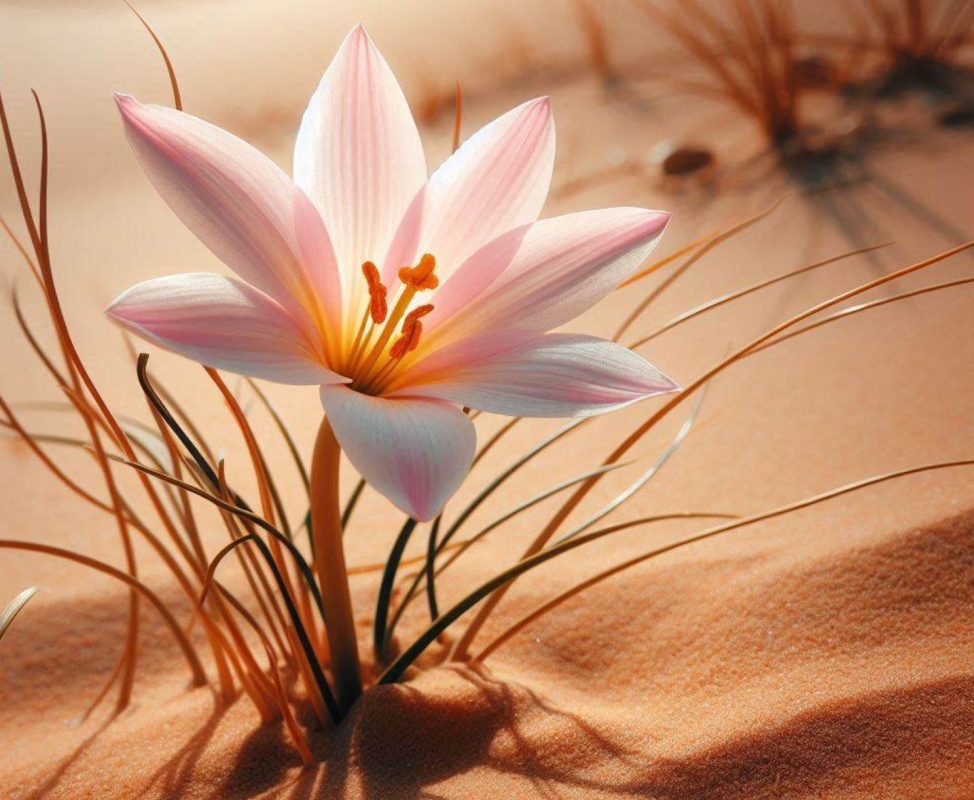
a piece about my unforgettable visit to the Palace of Knossos that connected me to my ancestors in a way nothing else has…
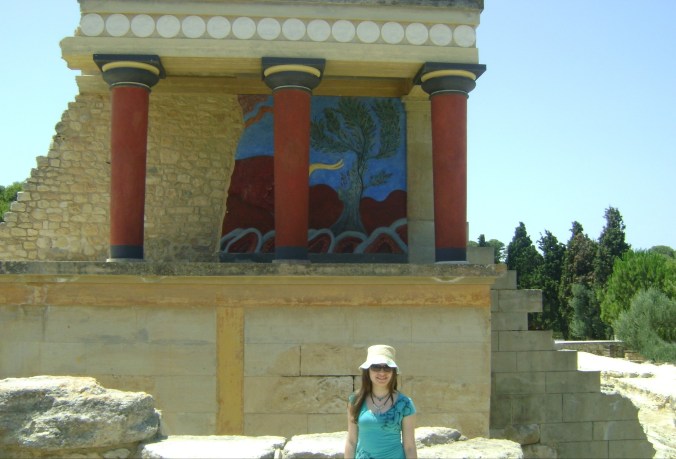
Mid-July sun scalds skin and ancient sites indiscriminately
and illuminates the same steps my ancestors took thousands of years ago.
The trickles of sweat down my brow are overshadowed by
the tingle up and down my spine as I approach
pithoi1 that once contained oil from olive trees that may still live to this day,2
vibrant frescoes that still echo the artistry of masterful Minoans
despite destruction by both nature’s and occupiers’ hands
and some questionable reconstructions,
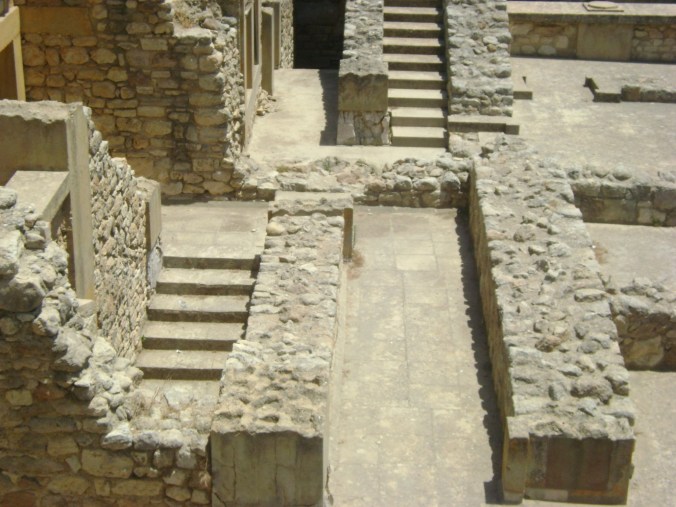
labyrinthine paths that, along with midday heat, further dizzy me.
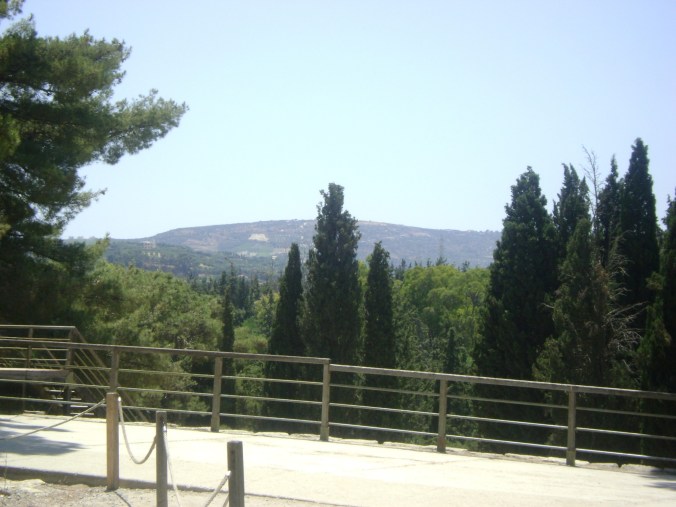
Mouth dry but mind bedazzled by
Mount Juktas (Γιούχτας)3 nearby
and Kephala Hill (Κεφάλα)
upon which Knossos (Κνωσσός) was built
that have seen it all since the dawn of their time,
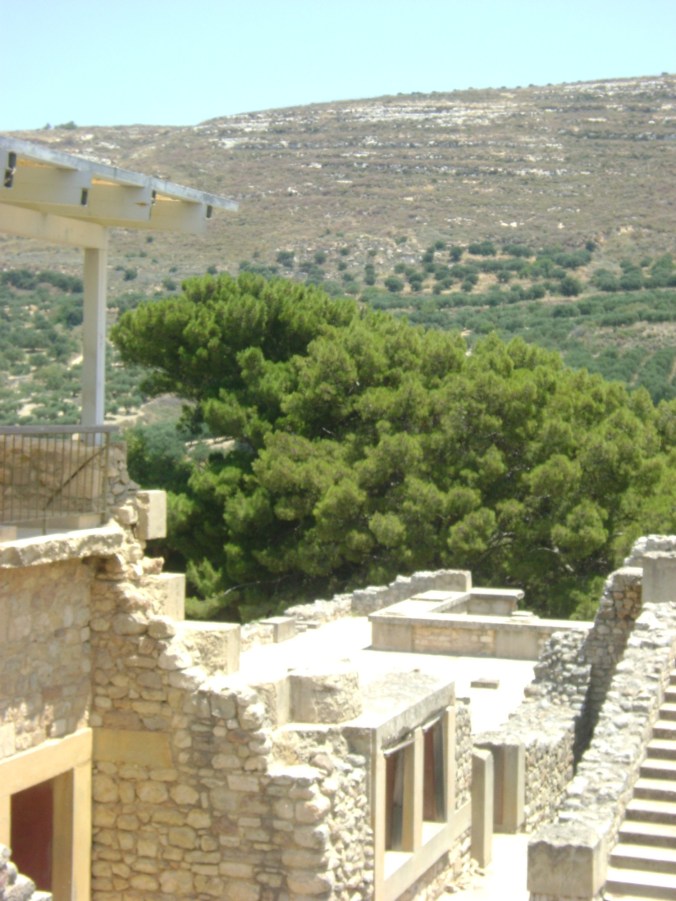
stone pines and cypress that envelop the sacred ruins
and perfume the air with an earthy resinous aroma
that graced festivals and rituals millennia ago.
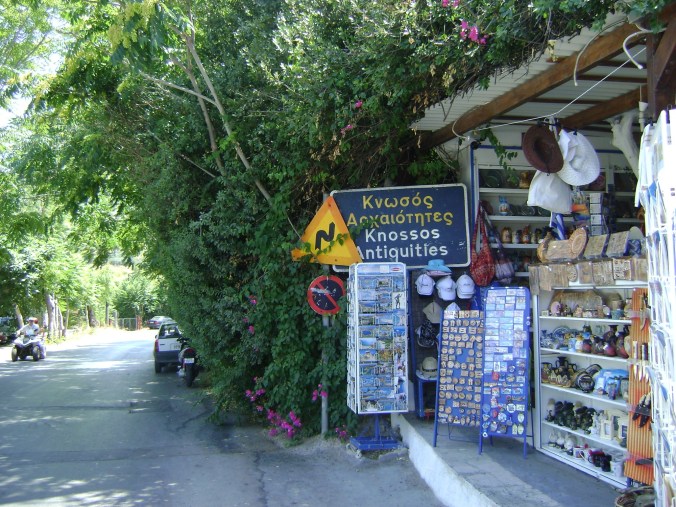
Finding solace in the shade of a souvenir shop
with the words “Knossos Antiquities” on the side
and shrubbery along the top,
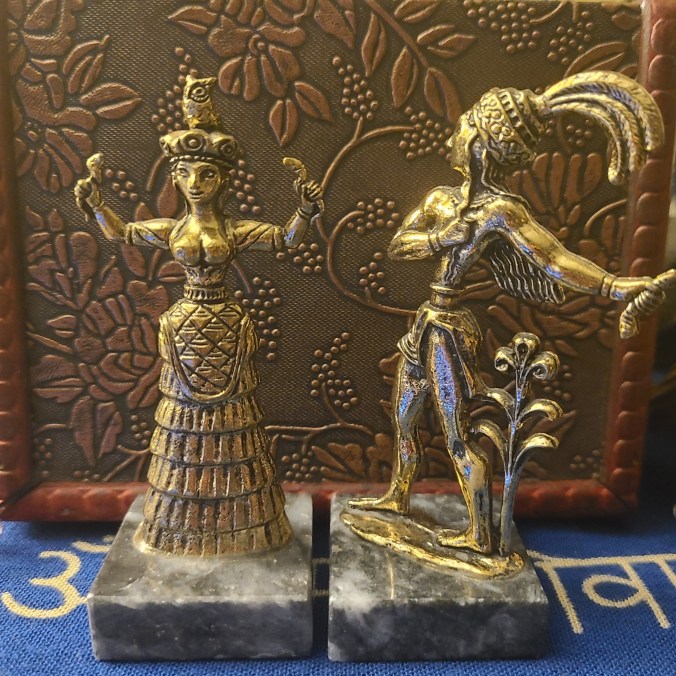
I immediately decide on a golden figurine
of the Snake Goddess with an owl atop her head,
not a cat that Arthur Evans and Halvor Bagge proposed
and transposed upon her crown.
As the sun shines just right,
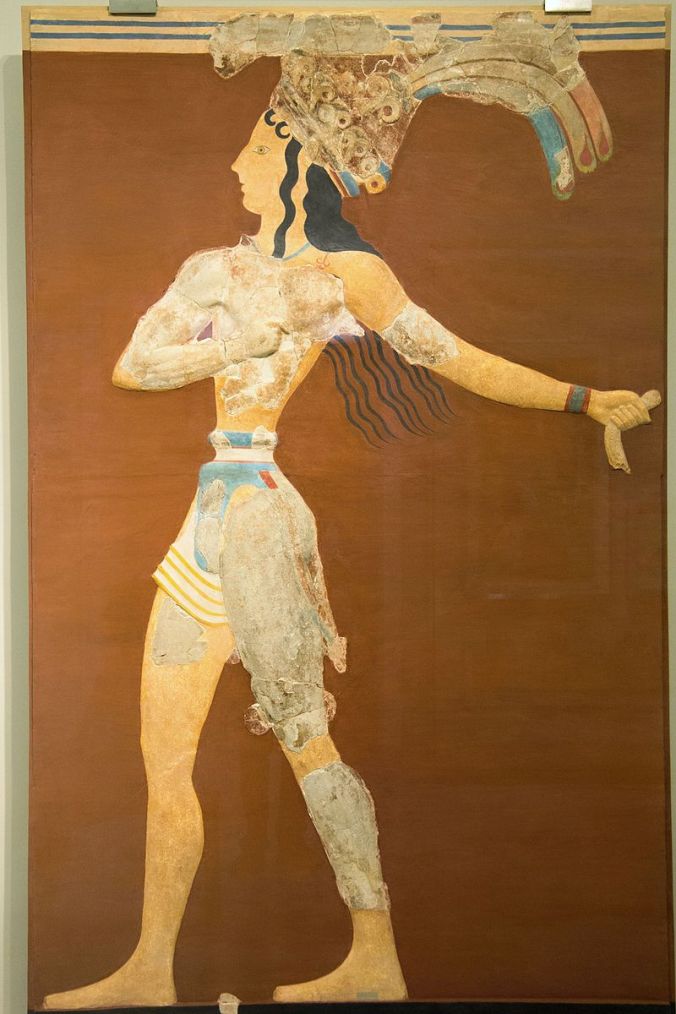
I then catch a glimpse of a mini Lily Prince
with a similar golden finish
and know then and there: I just have to have it!
Having promised my friends overseas
that I’d send them post cards,
I also select several that show Knossos
in its most magnificent light.
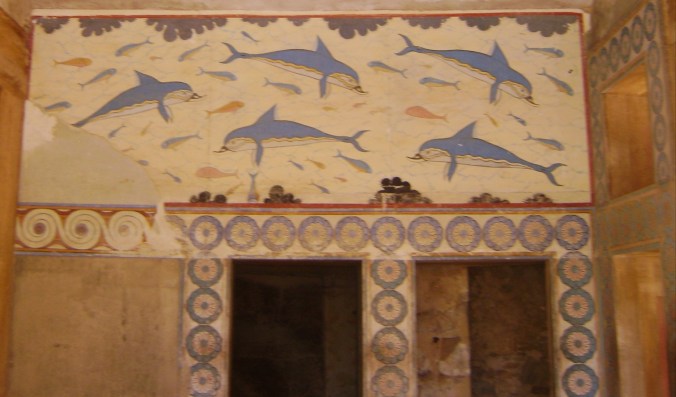
Upon returning to grandma’s (γιαγιά) house,
and after being well-fed, of course,
a satisfying exhaustion takes over my body
and I fall into a deep sleep,
charging bulls, dolphins, and griffins infiltrating my dreams.
The Lily Priest-King and The Snake Goddess themselves
observe me from afar with knowing smiles but grave eyes
as it starts raining rosettes.
A sudden tidal wave hits the Palace,
and a chilling darkness overcomes me.
I wake in a cold sweat in the same blackness
and fear I haven’t awakened at all4…
《Κόπηκε το ρεύμα,5》my γιαγιά blurts out.
***
I may have left, but the magic of Knossos
will never leave my heart and psyche,
even if I never set foot there ever again6.
*More photos from my trip can be viewed here.
Please pardon the blurriness in some – these were all taken with a relatively cheap digital camera back in 2011…

- ancient storage vessels ↩︎
- Gra Elia, while not at Knossos, is an ancient olive tree nearby that’s situated in the village of Vorizia, Heraklion. ↩︎
- a mountain located several kilometers away from Knossos that was a significant religious site for the Minoans ↩︎
- This actually happened! I sincerely thought I died. ↩︎
- “The power went out.” ↩︎
- I dream of being healed enough from generational trauma that I can return to my homeland someday. ↩︎