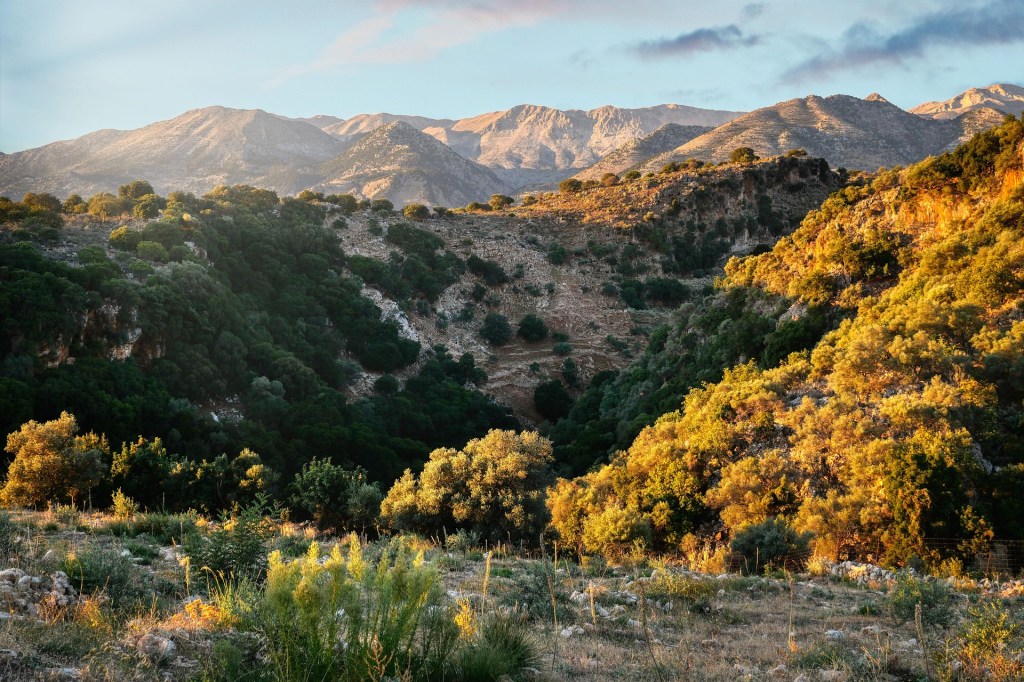
Minoan Mantinada of the Month / Μινωική Μαντινάδα του Μήνα #7: Guardians of Minoan Summer

Original Greek Version

Κουβαλάνε το καύσωνα μαζί τους τα γεράκια.
Μας ξανοίγουν απο ψηλά στα βουνά τα αγρίμια.

Αλλά η ισχυρή Θεά τα πάντα επιβλέπει.
Είτε παιδί, είτε λουλούδι, όλα τα προστατεύει.

Transliteration

Kouvaláne to káfsona mazí tous ta gerákia
Mas xanoígoun apo psilá sta vouná ta agrímia.

Allá i ischyrí Theá ta pánta epivlépei.
Eíte paidí, eíte louloúdi, óla ta prostatévei.

English Version

Falcons¹ bring the heatwaves along with them.
Kri-kri goats² observe us from the mountain.

But our fierce Goddess looks over everything.
She protects it all, flower³ or offspring.
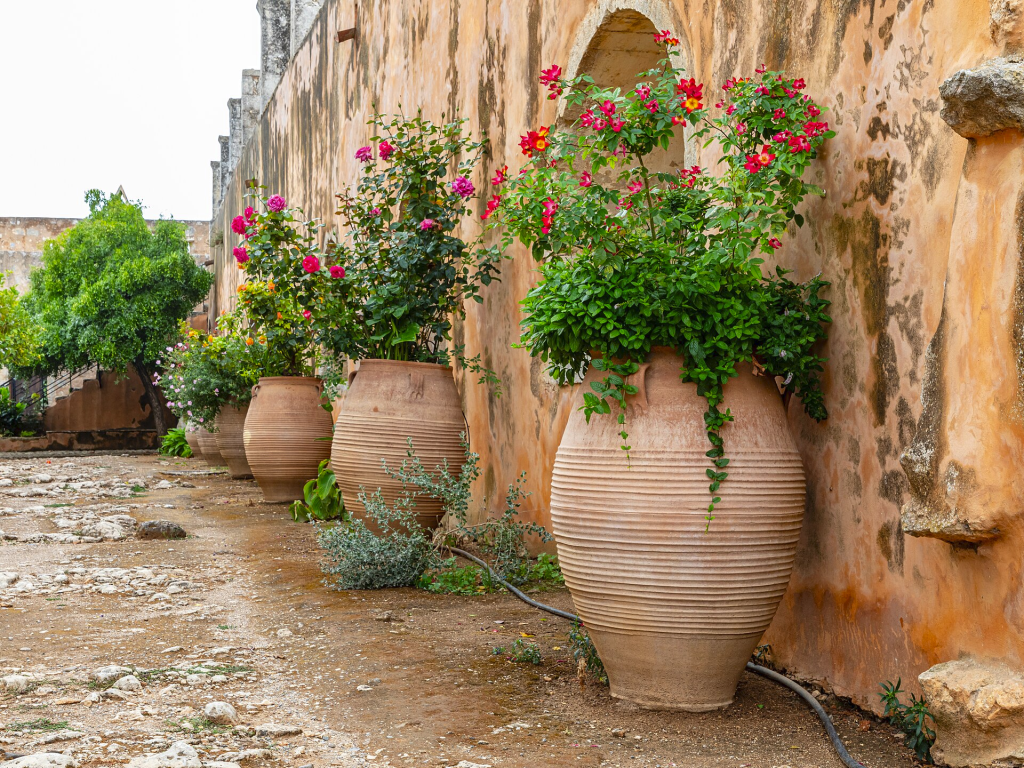
taken in Rethmyno Regional District, Crete via Wikimedia Commons
  1. Eleonora’s falcons are migratory and arrive in Crete around this time to breed on the coastal cliffs and offshore islets of Crete. As an indigenous Mediterranean raptor, the species has nested along the Aegean for thousands of years.
  2. Crete’s famous endemic wild goat. June is a very active time for them.
  3. Some of the main flowers on the island around this time are oleander and rockrose.
Minoan Mantinada of the Month / Μινωική Μαντινάδα του Μήνα #6: Minoan Winter

Original Greek Version

Άσπρα σαν τα σύννεφα ειν’τα βουνά εκιά πέρα.
Βροχή και καταβατικοί άνεμοι κάθε μέρα!

Δόξα την Θεά που η συγκομιδή ήταν άφθονη,
η ζεστασιά στα παλάτια και σπίτια μας μπόλικη.

Transliteration

Áspra san ta sýnnefa ein’ta vouná ekiá péra.
Vrohí kai katavatikoí ánemoi káthe méra!

Dóxa tin Theá pou i synkomidí ítan áfthoni,
i zestasiá sta palátia kai spítia mas bóliki.

English Version

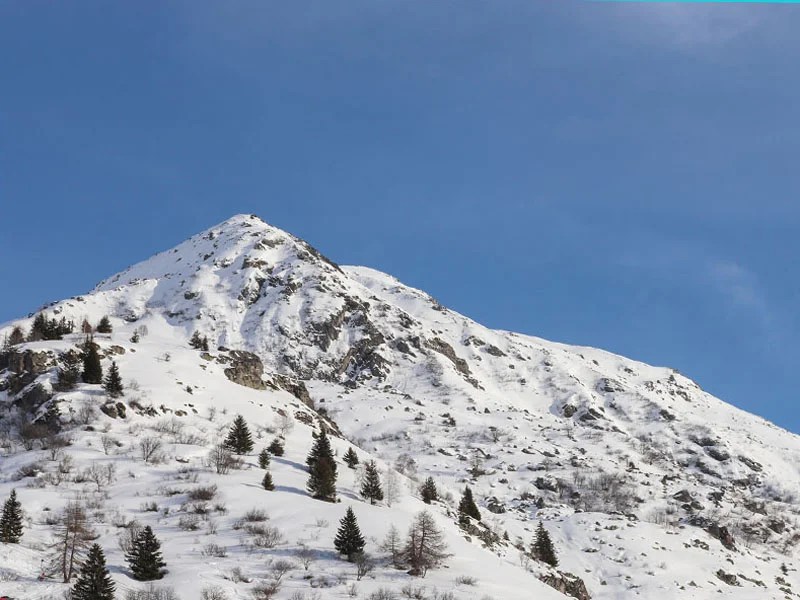
The mountains in the distance, white like clouds.
Rain and katabatic winds all around!

Thank Goddess the harvest was bountiful!
The warmth in our palaces, plentiful.

Mount Ida during winter

Note: Similar to Modern Crete, Ancient Crete had short, mild winters (though winters on the the north end were a little harsher). To keep warm, they utilized centralized heating systems in their palaces and elite homes and implemented bioclimatic architectural designs. Besides that, simple fires, heavier clothing, and communal living spaces were commonplace. Katabatic winds are winds that blow down a slope, which are caused by gravity pulling dense, cold air downhill.

Minoan Mantinada of the Month / Μινωική Μαντινάδα του Μήνα #4: Minoan Autumn

Original Greek Version

Η συγκομιδή ελιών και σταφυλιών ξεκίνησε!
Kόκκινο χρώμα από τα δέντρα εμφανίζεται.

Η καλοκαιρινές ακτίνες του Ήλιου δροσίζουν.
Στο πολύχρωμο τοπίο, oι δρόμοι ησυχάζουν.

Transliteration

I synkomidí elión kai stafylión xekínise!
Kókkino chróma apó ta déntra emfanízetai!

I kalokairinés aktínes tou Íliou drosízoun.
Sto polýhromo topío, oi drómoi isyházoun.

English Version

The olive and grape harvest has arrived!
Auburn hues of oaks and planes come alive!

Summer sun softens, gives way to brisk days.
Bustling streets halt in the changing landscape.

Literal Translation (sans proper syllable count)

The harvest of the olives and grapes has commenced!
Red color from the trees appears!

The summer rays of the Sun are cooling.
In the colorful landscape, the streets calm down.

Crete mountain in fall by fietzfotos

Note: While there’s a lack of records, modern trends of Cretan weather can inform the distant past. Autumn was and is a time for harvesting the island’s greatest commodities: olives and grapes. Wine was also made at this time. As the plane (platanos) and oak trees took on striking brownish-red and golden hues (but the deep green of cypress and olive trees remained), the Minoans, like present-day Cretans, prepared for the winter ahead. The seasonal shift definitely brought much reprieve on an island known for its summers of harsh heat and VERY dismal rain (if any).