
Minoan Mantinada of the Month / Μινωική Μαντινάδα του Μήνα #4: Minoan Autumn

Original Greek Version

Η συγκομιδή ελιών και σταφυλιών ξεκίνησε!
Kόκκινο χρώμα από τα δέντρα εμφανίζεται.

Η καλοκαιρινές ακτίνες του Ήλιου δροσίζουν.
Στο πολύχρωμο τοπίο, oι δρόμοι ησυχάζουν.

Transliteration

I synkomidí elión kai stafylión xekínise!
Kókkino chróma apó ta déntra emfanízetai!

I kalokairinés aktínes tou Íliou drosízoun.
Sto polýhromo topío, oi drómoi isyházoun.

English Version

The olive and grape harvest has arrived!
Auburn hues of oaks and planes come alive!

Summer sun softens, gives way to brisk days.
Bustling streets halt in the changing landscape.

Literal Translation (sans proper syllable count)

The harvest of the olives and grapes has commenced!
Red color from the trees appears!

The summer rays of the Sun are cooling.
In the colorful landscape, the streets calm down.
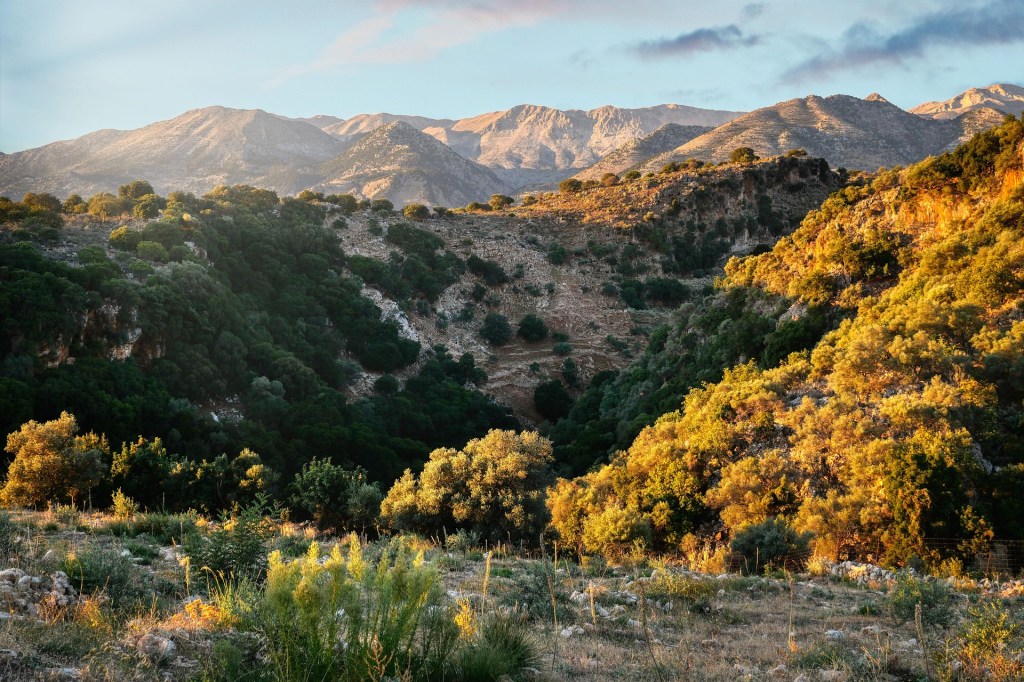
Crete mountain in fall by fietzfotos

Note: While there’s a lack of records, modern trends of Cretan weather can inform the distant past. Autumn was and is a time for harvesting the island’s greatest commodities: olives and grapes. Wine was also made at this time. As the plane (platanos) and oak trees took on striking brownish-red and golden hues (but the deep green of cypress and olive trees remained), the Minoans, like present-day Cretans, prepared for the winter ahead. The seasonal shift definitely brought much reprieve on an island known for its summers of harsh heat and VERY dismal rain (if any).
Minoan Mantinada of the Month / Μινωική Μαντινάδα του Μήνα #3: A Bull-Leaper’s Desire


Original Greek Version

Ο πιο δυνατός και γρήγορος ταύρος δεν με τρομάζει
αλλά κρατώ την πνοή μου όταν αυτός κοιτάζει.

Περνά συχνά να με βλέπει στην ταυροκαθάψια.
Το ενδιαφέρον του παίζει πολύ σημασία!

《Αγρίμι》 με φωνάζουν όλοι στο ντουνιά.
Λένε 《άφησε τούτο το σκοπό για να βρείς άντρα!》

Αλλά εγώ πιστεύω στο βάθος της καρδιάς μου,
θα βρω αγάπη χωρίς να σβήσω τα όνειρα μου.

English Transliteration

O pio dynatós kai grígoros távros den me tromázei
allá krató tin pnoí mou ótan aftós koitázei.

Perná sychná na me vlépei stin tavrokathápsia.
To endiaféron tou paízei polý simasía!

Agrími》 me fonázoun óloi sto ntouniá.
Léne 《áfise toúto to skopó gia na vreís ántra!》

Allá egó pistévo sto váthos tis kardiás mou,
tha vro agápi chorís na svíso ta óneira mou.

English Translation

The strongest, swiftest bull doesn’t scare me,
but I hold my breath when he looks at me.

He comes by often to watch me bull-leap.
His interest makes my heart skip a beat.

“Wild one,” most of the villagefolk call me.
They say, “Quit this gig so you can marry!”

But I believe, deep in my heart of hearts,
I’ll find love without snuffing out my spark.

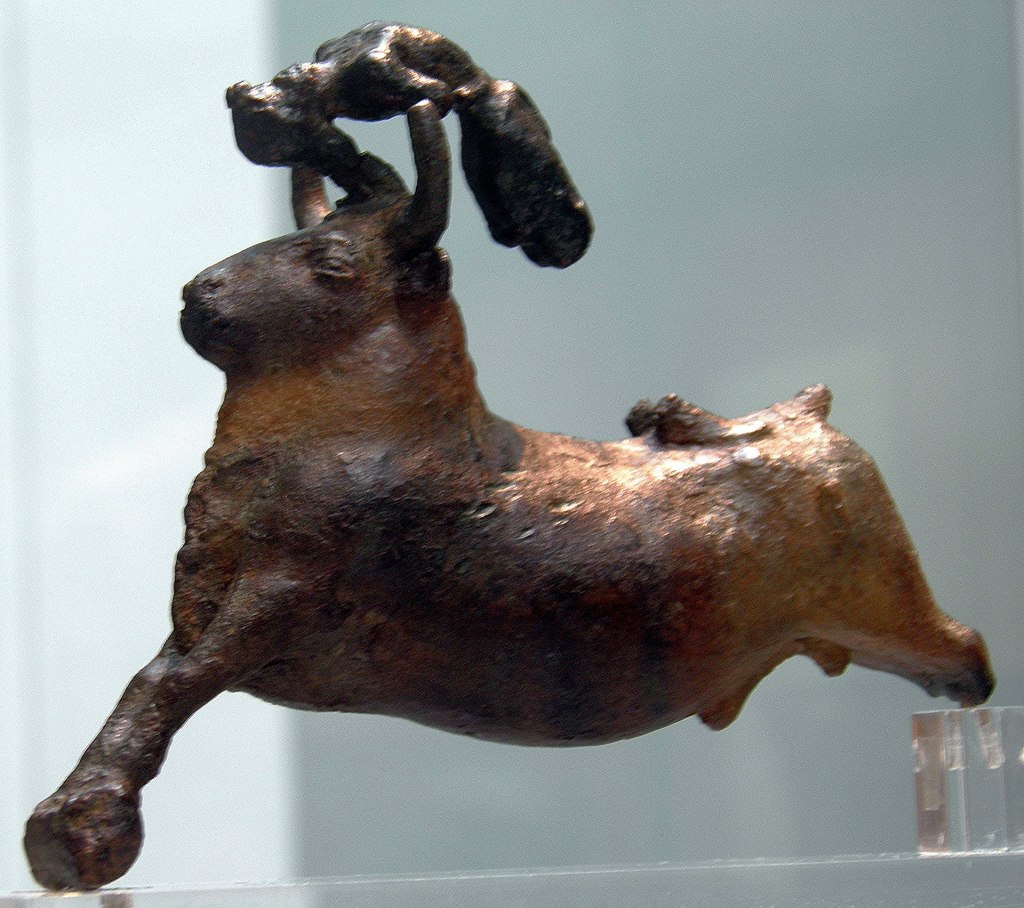
Note: This Cretan folk poem is about a Minoan bull-leaper who is seemingly fearless when it comes to bulls charging at her, but gets nervous the moment a romantic prospect looks her way. While Minoan society had egalitarian aspects (the fact that both men and women could be bull-leapers, for instance), there were still patriarchal elements and young women were expected to get married and start a family, as well as take on the family business. This starry-eyed bull-leaperess, however, plans on having both her love of bull-leaping and the love of her life someday. She refuses to give up one for the other!


Minoan Mantinada of the Month / Μινωική Μαντινάδα του Μήνα #2: A Saffron Gatherer’s Musings

Original Greek Version:

Η χέρα μου βαμμένη βαθυκίτρινη σαν ήλιο.
Χρυσοχέρα με φωνάζουν στην Θήρα και στην Κνωσό.

Τα μαλλιά μου πάντα θα μοσχοβολάνε σαν τη γη.
Θα μαζεύω σαφράν μέχρι την τελική μου πνοή.

Transliteration:

I héra mou vamméni vathykítrini san ílio.
Hrysohéra me fonázoun stin Thíra kai stin Knosó.

Ta malliá mou pánta tha moschovoláne san ti gi.
Tha mazévo safrán méhri tin telikí mou pnoí.

English Translation:

Μy hand, like the sun, is tinted yellow.
Golden-handed they call me in Knosso.

My tresses will always smell like the earth.
I’ll gather saffron ’til, with it, I merge.

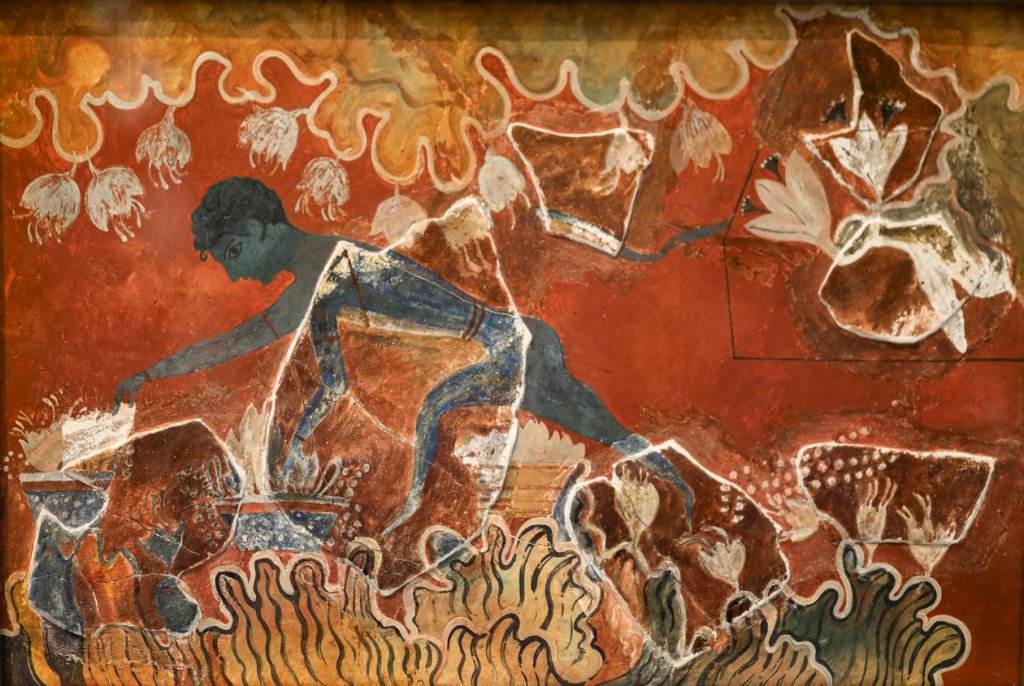
a fresco of a boy picking saffron

Note: This Cretan folk poem is inspired by Minoan saffron gatherer frescoes. I’d imagine something as time-consuming as saffron gathering would make it so a saffron gatherer’s fingers were continually tinted deep yellow. There is a level of precision and dexterity that is necessary due to the dainty and valuable nature of crocus stigmas, so I’d also like to think these gatherers were determined and patient people. Also, “χρυσοχέρα: hrysohéra” (golden-handed) is a common descriptor used amongst Greeks for someone who is good with their hands.