Minoan Symbols: Horns of Consecration 𓄋

The Symbol of Sanctity

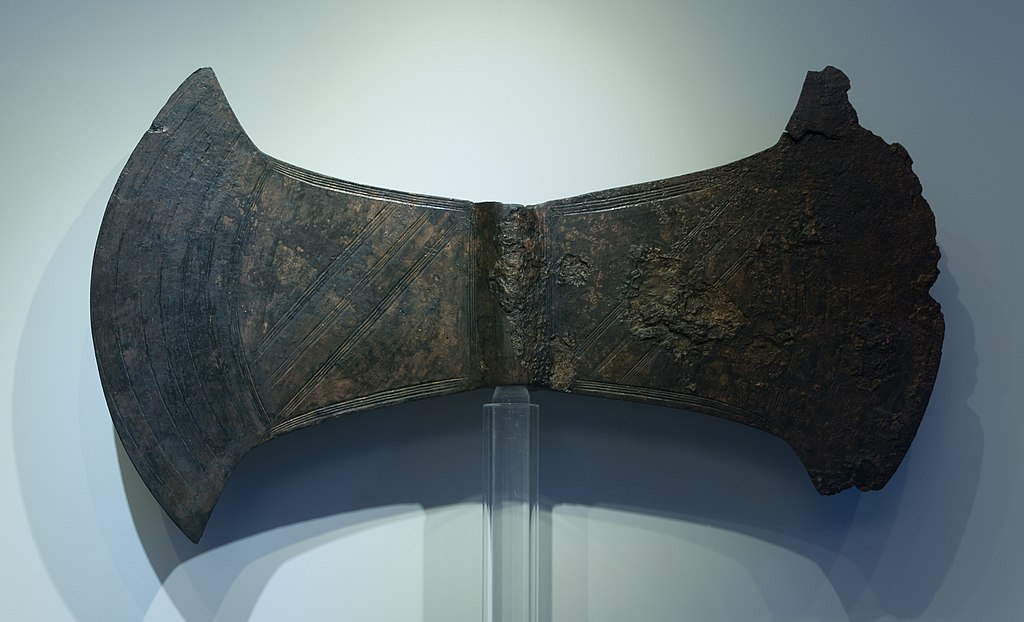
Sacred bull horns (made of limestone or clay) were one of the primary symbols in Minoan culture. They could be found on rooftops, tombs, larnakes (coffins), shrines, temple entrances, sealstones—you name it! In some instances, the horns were depicted with flowers or the labrys (butterfly axe) in between them. They were clearly a notable part of daily life as much as they were a part of mystical rituals, which is why archaeologist Arthur Evans coined them as such.

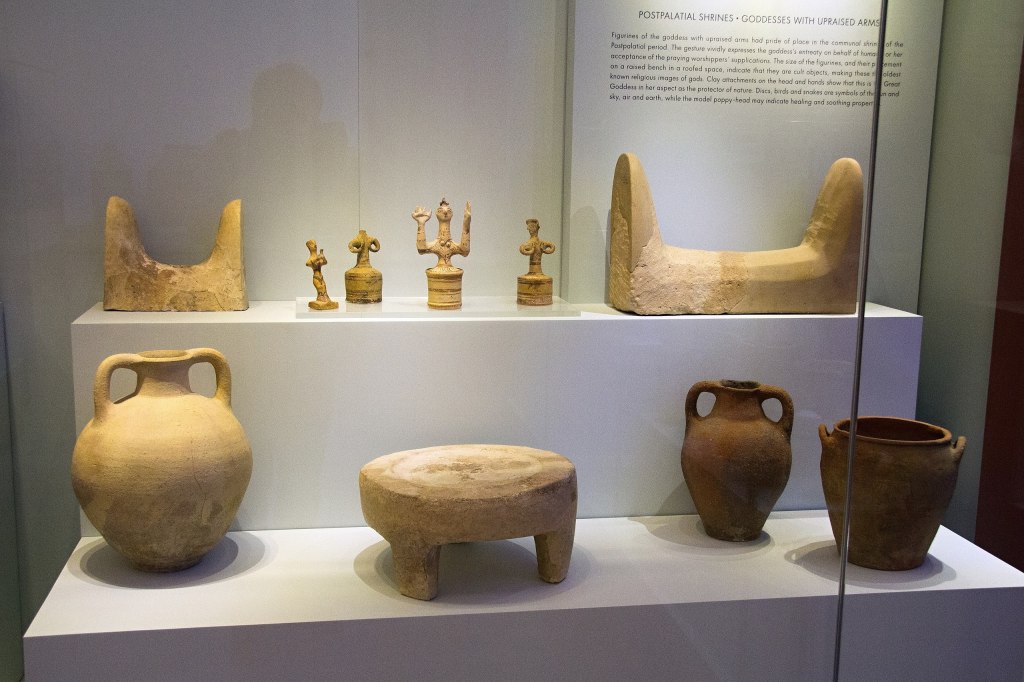
Findings from post-palatial shrines on Crete. Horns of Consecration are on the upper left and right. Displayed at the Archaeological Museum of Heraklion.

It has been suggested that the colossal horn sculptures atop buildings could have been used as frames for viewing stellar movement. However, one thing is for certain: these weren’t mere horns of a bull; they held religious significance—bulls in general were regarded as sacred animals to the Minoans and were integrated into most rituals.

Sacred Seat or Pot Holder… or Both?

Some scholars claim the larger Horns of Consecration served as honorary seats for royalty and/or deities. On the other hand, some scholars have had a more practical use in mind: perhaps the horns of lesser size were pot-support in a hearth. While a true consensus isn’t feasible, it would be safe to ascertain that these horns were in fact multi-functional.

The Bull Under The Sun

Another element of The Horns of Consecration are their potential solar quality (the sun was an equally important Minoan symbol). Many researchers like Emilia Banou (Faculty Member at University of the Peloponnese) propose that they are a sign of sun worship as posited in the following evidence:

  • a clay model of it on the peak sanctuary of Petsophas
  • astronomical research results from various other peak sanctuaries
  • a Goddess with Upraised Arms (pictured in the first photo in the upper center) alongside a clay model of Horns of Consecration were found at the Mycenaean cemetery of Tanagra

With Egyptian influence of Minoan culture being undeniable, such religious notions relay back to Ancient Egyptian symbols of both mountain and horizon, which ultimately have a solar basis.

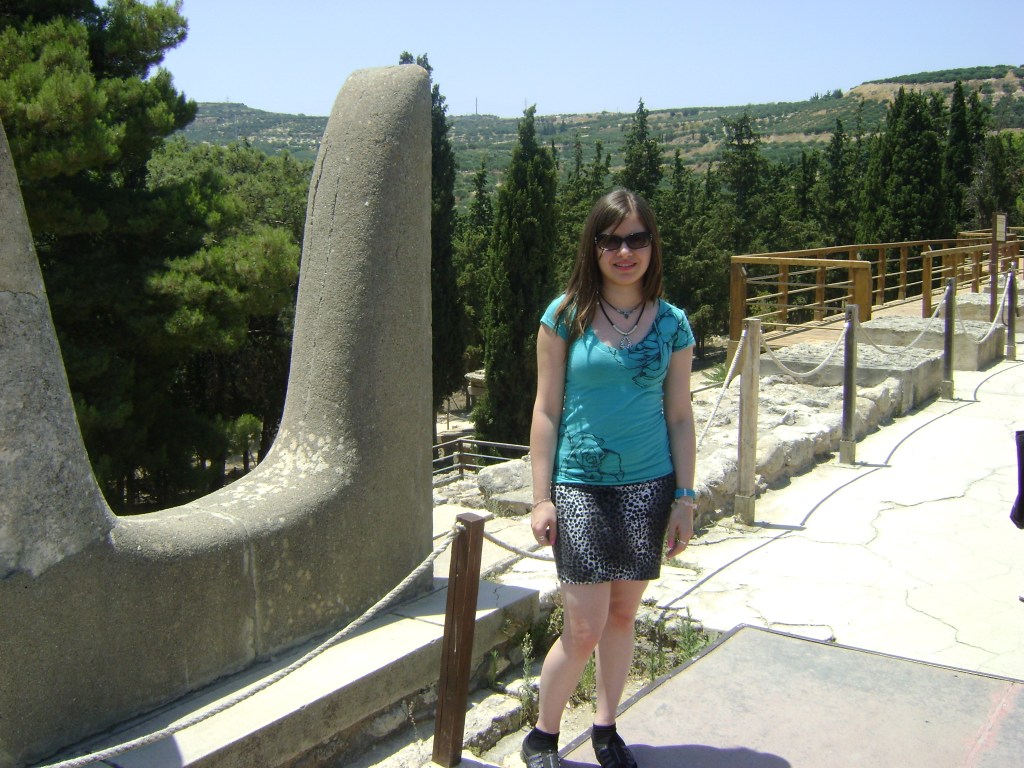
Me by the Sacred Horns of Consecration outside the South Entrance (Propylaea) of Knossos back in 2011. Reconstructed by Arthur Evans.

Academia: Horns of Consecration
BYU Library Digital Collections: Minoan Symbols
*Featured photo from Wikimedia Commons by Afrathianakis Emmanouil
*First photo from Wikimedia Commons by Rda

Ancient Cretan Cuisine: Food of the Minoans

A Diet That Spans Millennia

Thanks to the residue left behind in various storage containers (pithoi) and other vessels, archaeologists have been able to discern what kind of food and drinks the Minoans ate and drank. Unsurprisingly, a lot of it reflects what we now call the Mediterranean diet, which is rich with fresh fish and vegetables. As a Cretan person who has indulged in countless delicious feasts on and off the island, I smiled to myself thinking that some of what I’ve eaten (and thoroughly enjoyed) is what my ancestors have indulged in as well…

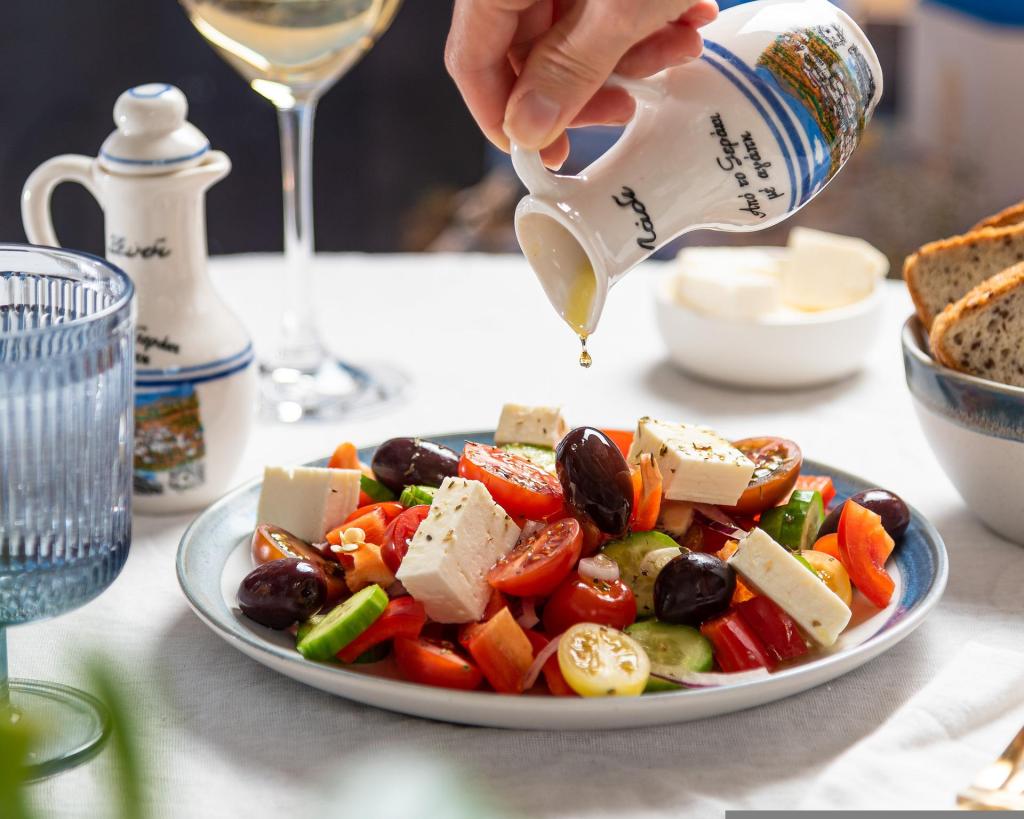
A picture of a Cretan salad called horiatiki salata (χωριάτικη σαλάτα).
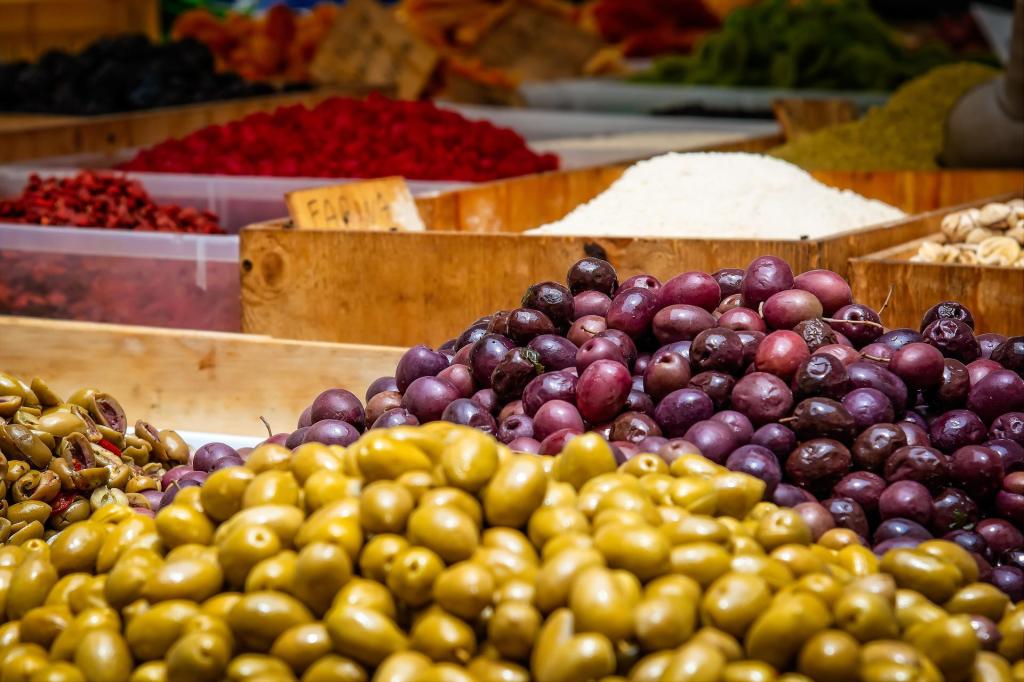
✔️olives, cheese made from goat’s milk (now feta), olive oil, wheat bread
❌tomatoes, cucumber, onion

Eating and Drinking like The Minoans

Outside of imports, this is what was available to the Minoans locally:

Fruit: figs, grapes, olives
Vegetables: lettuce, leafy greens, celery, artichoke, radish, leeks
Nuts: almonds, pistachios
Plant protein: lentils, beans (garbanzo and fava), peas
Grains: several types of wheat, barley, oats, cereal
Meat & Fish: squid, octopus barnacles, cuttlefish, sea snails, sheep, goat, land birds, and domesticated deer
Dairy: goat cheese, but no milk (no wonder the lactose intolerance rate is so high in Greece)
Drinks: herbal tea, resinated wine, pine resin, barely beer, honey mead
Sweetener (and deity offerings): honey
Spices: saffron, coriander, cumin, anise, rosemary

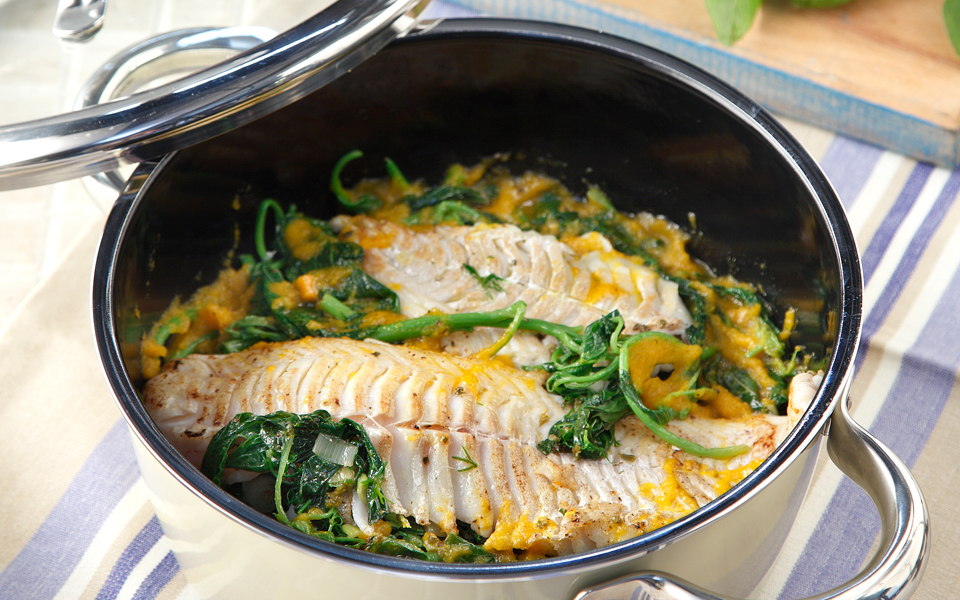
Stews seemed to be a staple, and while the following is a modern photo of a Greek fish stew with greens (ψάρι με βλίτα), this is more or less what you can expect a potentially affluent Ancient Cretan to be eating for dinner:

Photo by Giorgos Dracopoulos

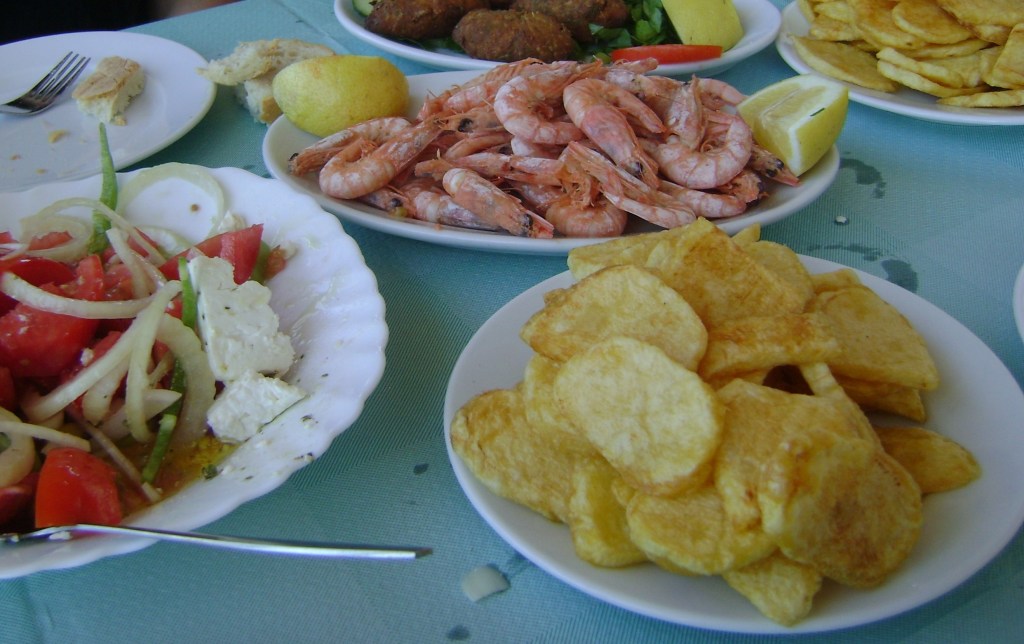
And the photo below is part of a feast I had at a taverna near The Palace of Knossos after my daylong adventure there. As you can see, those modern Cretan specialties are definitely not Minoan ones, but there’s an overlap: seafood, olive oil, feta, olives… And if we throw imports into the mix, perhaps they even had tomatoes, onions, bell peppers, and potatoes as well.

Based off that hefty Minoan food list, I’d like to come up with some recipes that are Minoan-inspired in nature or unique spins to current Cretan recipes. When I/if do (and they end up tasting more than passable), I’ll post them. 🙂

Explore Crete: Minoan Herbs
Minoans: Peoples of the Past by J. Lesley Fitton

*The first two photos are from Pixabay.com and the featured photo is from Wikimedia Commons

The Minoan Mother Goddess

Multifaceted Goddess or Many Deities?

According to numerous scholars, the primary deity in the Minoan religion was a multifaceted mother goddess who was solar in nature. Usually, “she” was depicted alongside animals (both mythical and native to the land), a male consort, and/or priestesses. While there is no true consensus, she is considered one deity with various aspects, including a mountain, dove, poppy, snake, and fertility goddess. This presumed multidimensional goddess would eventually become the Artemis, Athena, Ariadne, Medusa, etc. of the Ancient Greek pantheon. At the same time, there’s a good chance that their religion was polytheistic, and these were all separate gods with their own unique attributes.

Snake Goddess from the Palace of Knossos – Wikimedia User Photo by Chris73

The Maternal Snake Goddess (or Priestess)

What typically comes to mind for the Minoan Mother Goddess is the Snake Goddess figurine that was restored by British archeologist Arthur Evans along with Danish artist Halvor Baggeartist. The main problematic elements are that her head and part of her arm were missing and it’s not 100% certain that she was a true goddess. In general, it’s been difficult to distinguish between deity, priestess, ruler, etc. in Minoan art. However, the symbolism behind The Snake Goddess in particular is creation, fertility, welfare of the household, and wisdom. And if we were to take a retrospective approach from an Ancient Greek perspective to this particular deity depiction, we can see some of those traits in goddesses like Athena, goddess of wisdom and protectress of cities. In fact, “Atana Potnia” (thought to be Mistress Athena) is one of the Minoan Mother Goddess’ many names (that could be the names of other goddesses if the religion is in fact polytheistic).

Illustration of “Faience figure from Knossos – A votary of the Snake Goddess” in The Outline of History written by H.G. Wells and illustrated by J. F. Horrabin

A Breakdown of Key Mother Goddess Traits

Domains: renewal, household welfare, wisdom, renewal, fertility, sexuality, creation
Other Names: Diktynna, Great Mother Goddess, Great Goddess, Atano Djuwaja, Atana Potinija, Atana Potnia, Mater Theia
Deity Type: cthonic, creatress, household
Symbols: sun, various animals (especially snakes). A cat is depicted atop the Snake Goddess figurine’s crown, but that is a controversial addition to this day. In fact, a replica that I bought from the Knossos gift shop has an owl on top.
Precursor to: Artemis Eileithyia (Greek goddess of childbirth) and Athena Parthenos (Greek virgin warrior goddess)
Goddess Equivalent: Neith (Egyptian goddess of creation, war, and weaving)
Other Associations: Ariadne (goddess of labyrinths and Cretan Princess), Medusa (one of the three Gorgons in Greek mythology)