Minoan Symbols: Bees & Honey 𓆤

Beekeeping equipment, beehive fragments, and depictions of beehives that date all the way back to 1,700 BCE are amongst various archaeological findings on the island of Crete and Thera. From The Malia Pendant that depicts two conjoined bees to remnants of honey offerings to their deities, bees (and the honey they produced) were integral symbols to the Minoans.
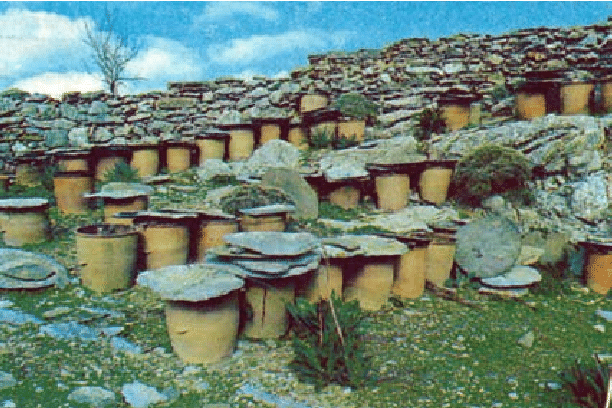
Abandoned apiary of vraski hives covered with stone slabs by K Savvakis

With how intrinsically connected the Minoans were to nature, it’s no surprise that bees and honeycombs were a recurrent motif in their frescoes, pottery, seals, and more.
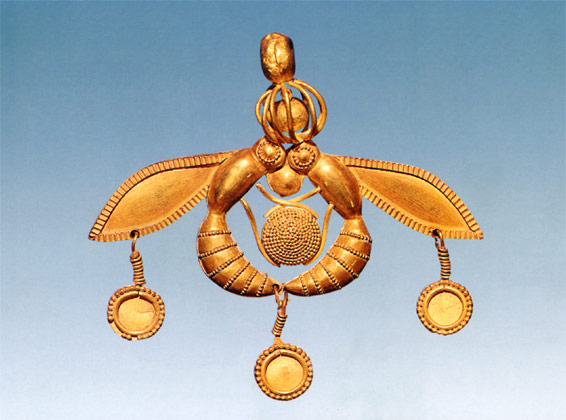
While archeologist Dr. Georgios Mavrofridis and some of his colleagues posited that The Malia Pendant was modeled after the mammoth wasp (Megascolia maculate), The Malia Pendant (Χρυσό κόσμημα των Μαλίων) and “The Bees of Malia” are used interchangeably. At first glance, the impression that these may be wasps instead makes sense, if it wasn’t for the Minoan’s tendency to distort, and in most cases exaggerate, the forms of creatures and humans alike in their art. Realism just wasn’t of primary focus. This embellished art style was also evident in Egyptian art, which directly inspired them. For instance, the elongated thorax and abdomen bees were often depicted with at that time emphasized fertility. Furthermore, The Malia Pendant showcased the production cycle of honey, and thus, the inescapable cycle of life and death.

A potential apiary (a place where bees are kept) is depicted in the structure painted on the south wall of the Miniature Frieze from the West House at Akrotiri, Thera. Covering the slope of a hill, it comprises dual vertical blue bands on its western edge as well as four horizontal blue bands, five rows of black triangles with circular openings at their base alternating with the aforementioned bands. In addition to an apiary, this has been deemed a shipshed, storage area, and more.
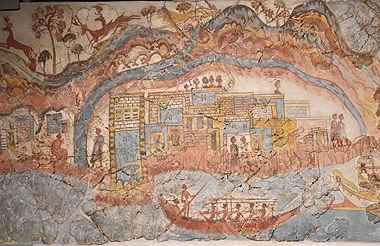
However, there are several uncanny details that lean towards the apiary interpretation. For instance, the triangular aspects likely depict the fixed-comb beehives that are still used in Greece to this day. Moreover, the path that goes from the apiary and joins the settlement with the three-part building at the hill’s zenith may signify organized beekeeping. The trapezoid-shaped expanse of blue to the east possibly portrays a pond (a water source being another vital aspect of beekeeping). While theoretical, researcher Irini Papageorgiou believes the scope of the area encompassed by the installation and the prominence of beekeeping products (indicated by both chemical analysis and Linear B tablets references) do, in fact, point to an apiary.
Honey was utilized in numerous areas of Minoan life, making it almost if not just as valuable as olive oil. With how ubiquitous of a commodity it was, this liquid gold had multifaceted symbolism to match.
Based on archive tablets found at Knossos, it was noted that honey offerings were made to the pre-Hellenic goddess based out of Crete, Eileithyia (goddess of childbirth and midwifery). More specifically, the kernos or offering table in the temple at Malia was used to offer grains and honey to her. In general, the regenerative aspects of bees were a key symbolic attribute of a Minoan goddess.
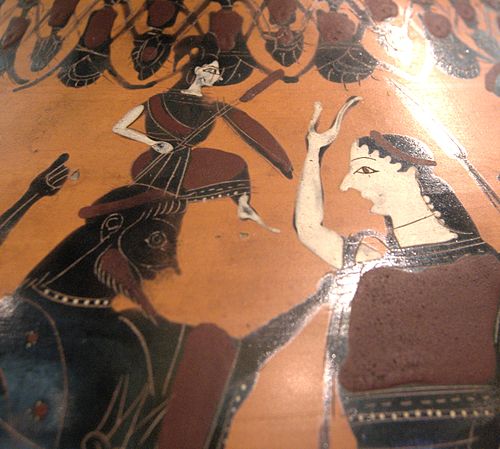
Birth of Athena from Zeus' head with the assistance of Eileithyia

Honeycomb imagery was also prevalent in various tombs, symbolizing the renewal to be found in the afterlife—renewal in the sense of change in form, not necessarily size (i.e. bees start as an egg, then larva, followed by pupa before fully grown).

Bees’ tendency to swarm and even dance in synchrony (and the fact that they congregate in hives) serves as a symbol of community and oneness.

And while more prominent in Ancient Greece, bees were generally regarded as divine messengers that imparted wisdom and eloquence to mortals when imbibed.

In addition to Minoan spirituality, honey was crucial to the Minoan economy and trade. Not only was it their primary source of sweetener, but it also provided them with a versatile food source with substantial nutritional value. Honey was a highly coveted additive of alcoholic beverages like mulled wine as well.
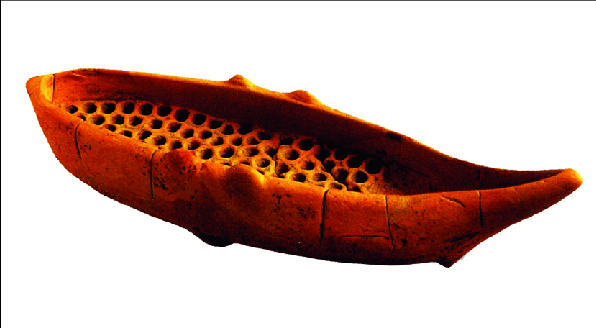
Minoan ceramic model of a boat transporting honey combs

Honey was used as a skincare product and ointment across multiple ancient civilizations throughout West Asia and the Mediterranean, especially during The Bronze Age. Honey, often mixed with olive oil, was and is still used to hydrate, soothe, and exfoliate skin, leading to a more youthful complexion. Due to its anti-inflammatory and antiseptic properties, honey was applied to wounds for enhanced healing and to prevent infections.

Needless to say, honey was an elixir of life and longevity to countless civilizations, including the Minoan civilization.

The Many Names of Crete Through the Ages: From Kaptara to Krētē

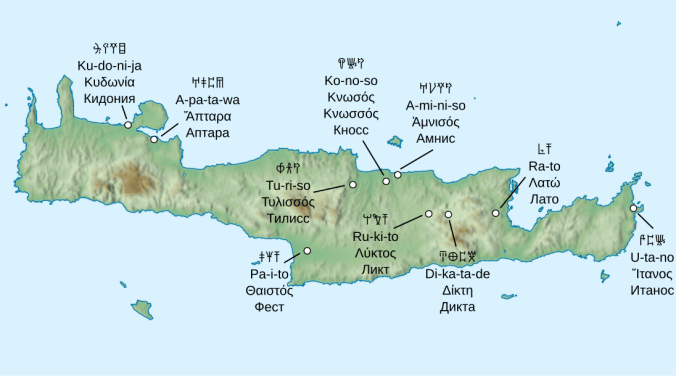
Before Crete (Κρήτη: Krētē) was, in fact, called Crete, it was referred to as Kaptara (its earliest known reference, c. 1800 BCE) in Syrian and Neo-Assyrian, Keftiu (Kftı͗w, c. 1480 BCE) in Ancient Egyptian, and Caphtor in the Bible.

An old map of Achaean Crete in color

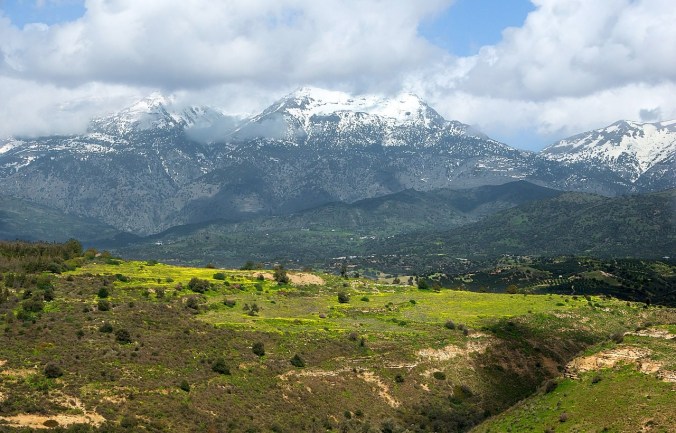
Many scholars deem Keftiu to be more similar to the Minoan name than “Minoan” ever was, which may be derived from the Greek word for “the nail of the earth” or “the peak of the mountain”. This phrase refers to the dominant peak of Crete (Mount Ida at 8,058 feet), which was a well-known landmark for seafarers. The Middle and Late Egyptian versions were as follows: Keft, Keftu, Kaftu, Kafta, Kefdet, Keftju.

Mount Ida in Rethymno, Crete
Mount Ida. Credit: Jebulon

However, it is important to note there’s been much debate over what Keftiu is truly referring to. While some scholars say Cyprus or Syria, the stone base of a statue during Amenhotep III’s reign states otherwise. Kftı͗w is in a list of Mediterranean ship stops to Cretan cities like Kydonia and Phaistos, which clearly points to the Aegean, not Anatolia.

Its initial Crete-adjacent iteration was found in Mycenaean Greek texts dating back to around 1,500 BCE. In Linear B, it was written as 𐀐𐀩𐀳 (ke-re-te) at first. Later on, it took on the names 𐀐𐀩𐀯𐀍 (ke-re-si-jo), Κρῆτες (Krētes), and Κρήσιος (Krēsios).

In Ancient Greek, Crete’s current name (Κρέτα (Kréta) to the ancient Doric Greeks) first appeared in The Odyssey. While its etymology isn’t entirely certain, there are two main propositions. The less likely notion between the two is that Crete could stem from a hypothetical Anatolian Luwian word kursatta (kursawar: island). However, there’s more of a consensus surrounding its Ancient Greek origins. Crete could very well stem from “κραταιή” (krataie̅), which means strong or stronghold, reflecting the fact that the island was the strongest thalassocracy (maritime empire) in the ancient world.

Interestingly, κριτικός (krētēkos), which is a homonym of Κρητικός (what you call a Cretan man), means “able to discern or be critical.” Though this is simply something I personally noticed, this could relay to their command over both rugged terrain and tumultuous sea, and the critical thinking involved in traversing both.

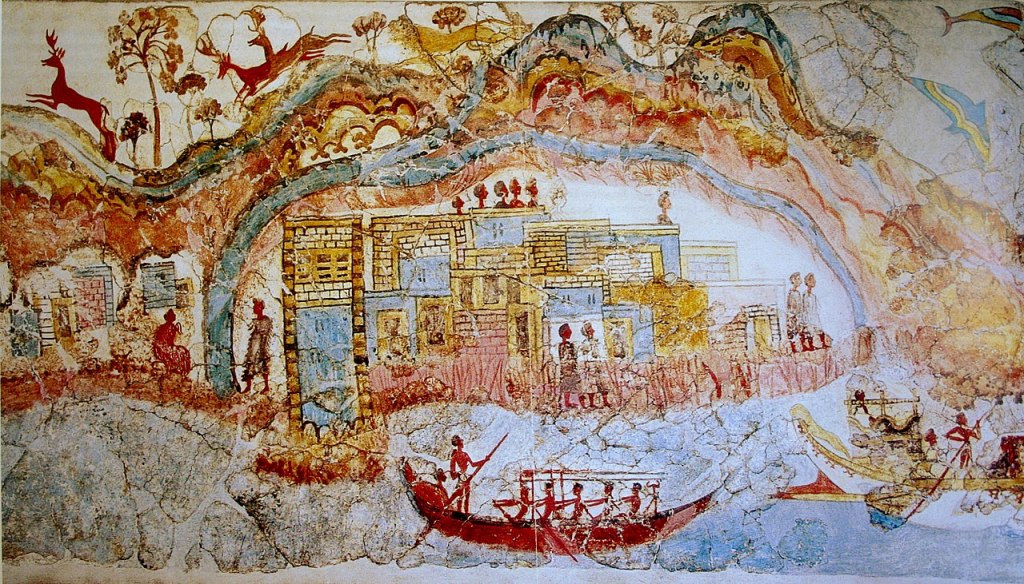
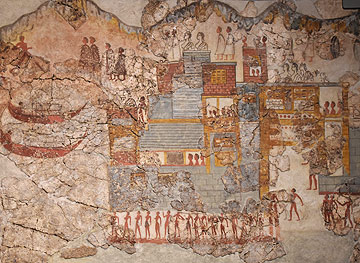
The Ship Procession or the Flotilla frieze

Another near-homonym could just be another interesting coincidence, but when it comes to Caphtor, that is very similar to the word for “hot” in Greek (kaftó: καυτό). Crete has a temperate Mediterranean climate, which means summers are hot and dry. I can even attest to the intense heat having stayed at my γιαγιά’s non-airconditioned house during many a summer.

I’d definitely take the above thoughts with a grain of salt because the closest Greek word to Keftiu is keftés (κεφτές), which means “meatball”. While κεφτέδες are a Greek delicacy, the two words are clearly not related. It’s just interesting to me that some foreign names for Crete actually hold relevant meanings.

From Kaptara to Krētē, the ‘k’ sound has (mostly) remained since its very first known iteration. However, what has been mentioned isn’t all-inclusive. In Latin, Crete is Creta, whereas the original Arabic name was Iqrīṭiš (اقريطش) and then changed to Χάνδαξ (Chandax).

Candia, derived from the French Candie, was used in Latin, Italian, and Venetian. In Ottoman Turkish under Ottoman rule, Crete was called Girit (كريد: precious stone), which brings up another uncanny coincidence. My μαμά’s Cretan maiden name means precious stone, which I won’t mention here for privacy reasons. The “-akis” suffix was added later on, which means “small”, changing the name meaning to pebble. While that’s a point of pride during modern times, that was added to Cretan surnames during the Turkish occupation to demean Cretans.

  • Caphtor/Keftiu: A New Investigation by John Strange
  • The Aegean Bronze Age by Oliver Dickinson

Communing with My Ancestors at Knossos (a poem with photos)

a piece about my unforgettable visit to the Palace of Knossos that connected me to my ancestors in a way nothing else has…

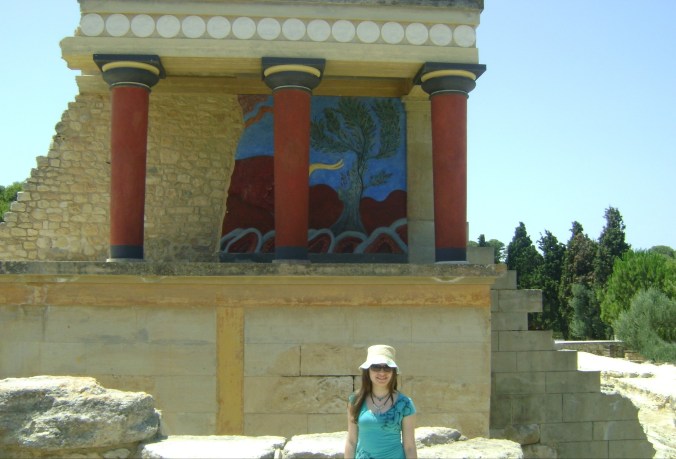
Me by the Restored North Entrance with the Charging Bull fresco
me by the Restored North Entrance with the Charging Bull Fresco

Mid-July sun scalds skin and ancient sites indiscriminately
and illuminates the same steps my ancestors took thousands of years ago.
The trickles of sweat down my brow are overshadowed by
the tingle up and down my spine as I approach
pithoi1 that once contained oil from olive trees that may still live to this day,2
vibrant frescoes that still echo the artistry of masterful Minoans
despite destruction by both nature’s and occupiers’ hands
and some questionable reconstructions,
labyrinthine paths that, along with midday heat, further dizzy me.

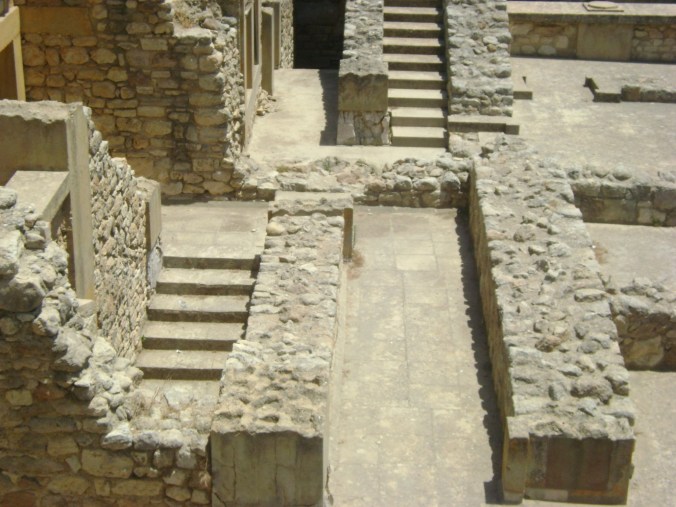
Knossos stonework, paths, and stairs
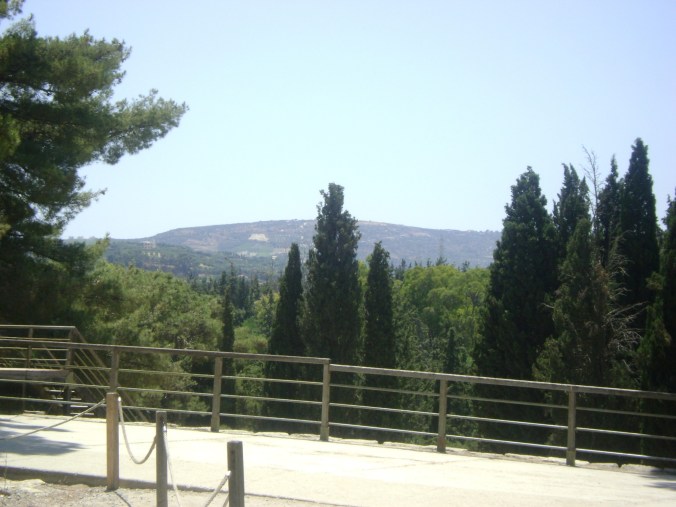
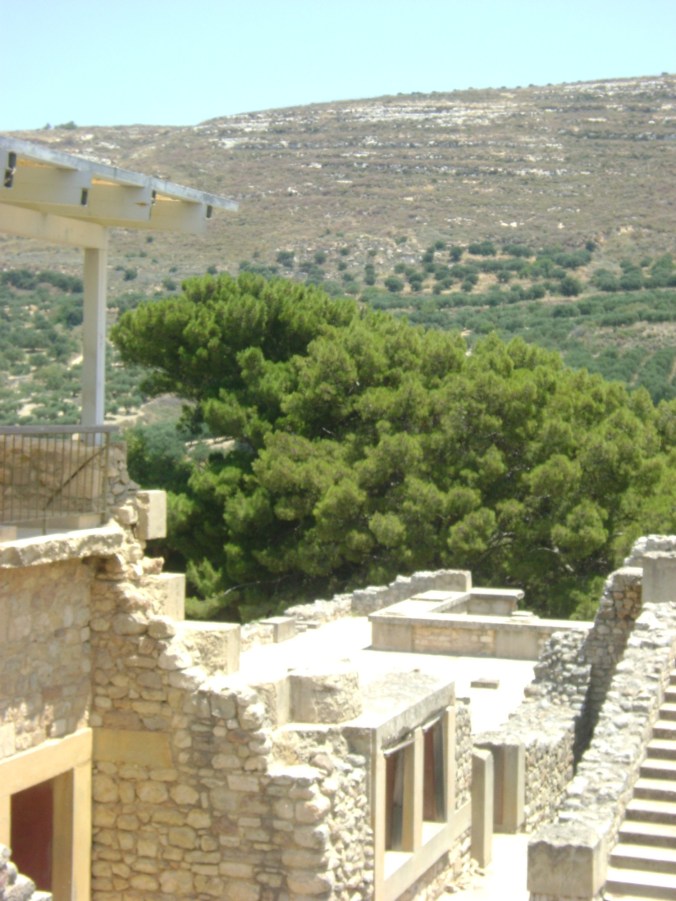
the view from Knossos

Mouth dry but mind bedazzled by
Mount Juktas (Γιούχτας)3 nearby
and Kephala Hill (Κεφάλα)
upon which Knossos (Κνωσσός) was built
that have seen it all since the dawn of their time,
stone pines and cypress that envelop the sacred ruins
and perfume the air with an earthy resinous aroma
that graced festivals and rituals millennia ago.

The view from Knossos
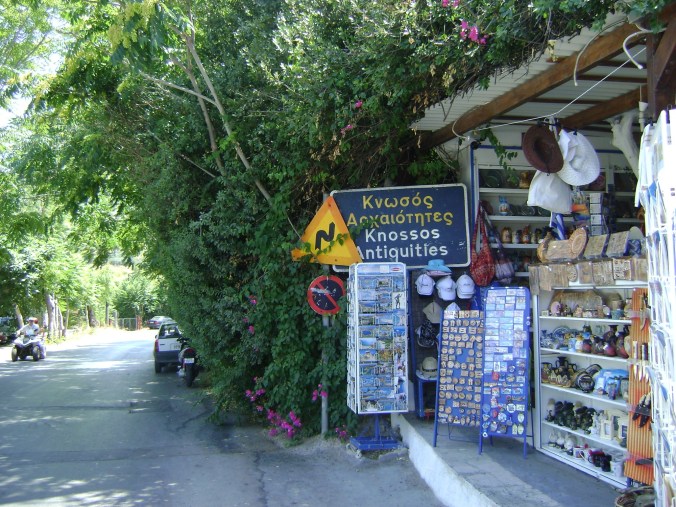
Knossos souvenir shop

Finding solace in the shade of a souvenir shop
with the words “Knossos Antiquities” on the side
and shrubbery along the top,
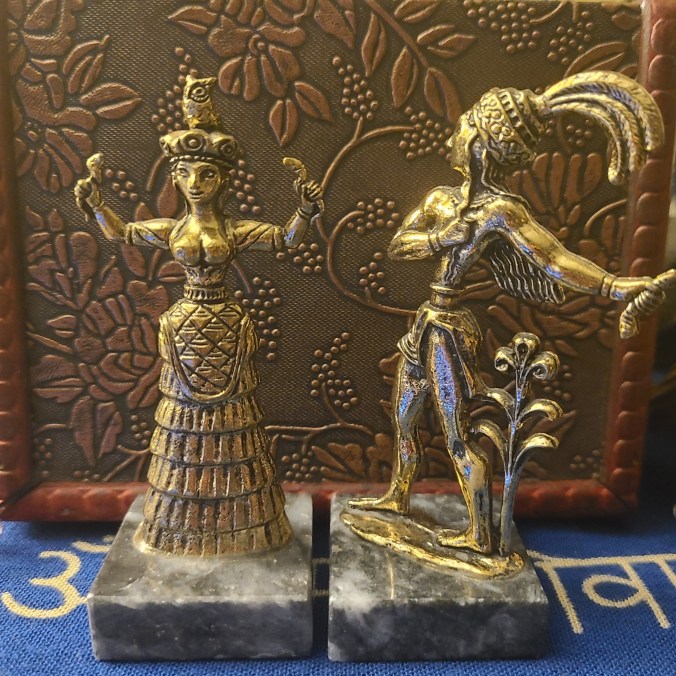
I immediately decide on a golden figurine
of the Snake Goddess with an owl atop her head,
not a cat that Arthur Evans and Halvor Bagge proposed
and transposed upon her crown.
As the sun shines just right,
I then catch a glimpse of a mini Lily Prince
with a similar golden finish
and know then and there: I just have to have it!
Having promised my friends overseas
that I’d send them post cards,
I also select several that show Knossos
in its most magnificent light.

Snake Goddess and Lily Prince figurines from a Knossos souvenir shop
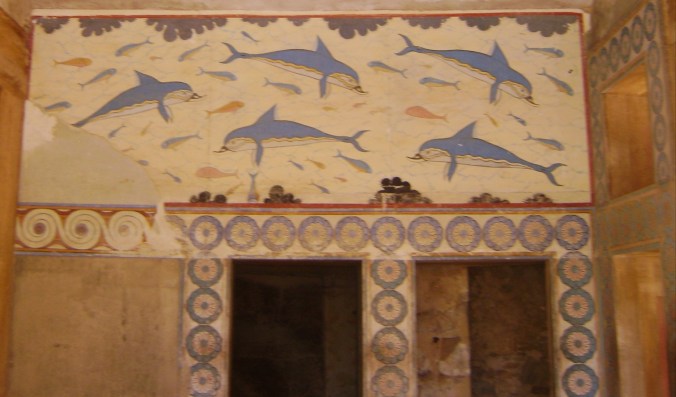
The Dolphin Fresco

Upon returning to grandma’s (γιαγιά) house,
and after being well-fed, of course,
a satisfying exhaustion takes over my body
and I fall into a deep sleep,
charging bulls, dolphins, and griffins infiltrating my dreams.
The Lily Priest-King and The Snake Goddess themselves
observe me from afar with knowing smiles but grave eyes
as it starts raining rosettes.
A sudden tidal wave hits the Palace,
and a chilling darkness overcomes me.
I wake in a cold sweat in the same blackness
and fear I haven’t awakened at all4

《Κόπηκε το ρεύμα,5》my γιαγιά blurts out.

***

I may have left, but the magic of Knossos
will never leave my heart and psyche,
even if I never set foot there ever again
6.


*More photos from my trip can be viewed here.
Please pardon the blurriness in some – these were all taken with a relatively cheap digital camera back in 2011…

Rosette divider
  1. ancient storage vessels ↩︎
  2. Gra Elia, while not at Knossos, is an ancient olive tree nearby that’s situated in the village of Vorizia, Heraklion. ↩︎
  3. a mountain located several kilometers away from Knossos that was a significant religious site for the Minoans ↩︎
  4. This actually happened! I sincerely thought I died. ↩︎
  5. “The power went out.” ↩︎
  6. I dream of being healed enough from generational trauma that I can return to my homeland someday. ↩︎