This article is very detailed and full of stunning photos. I highly recommend reading it and following Len’s blog! 🙂
Crete
Major Happenings in Ancient Crete: A Timeline

When one hears “Ancient Crete,” The Minoans come to mind, and while that is a key milestone in early Cretan history, that’s not the entire story. Below are some key happenings up until 395 CE. Seeing as this is a Minoan-focused blog, details will be mainly included for events pertaining to the Minoan civilization and what led up to it.
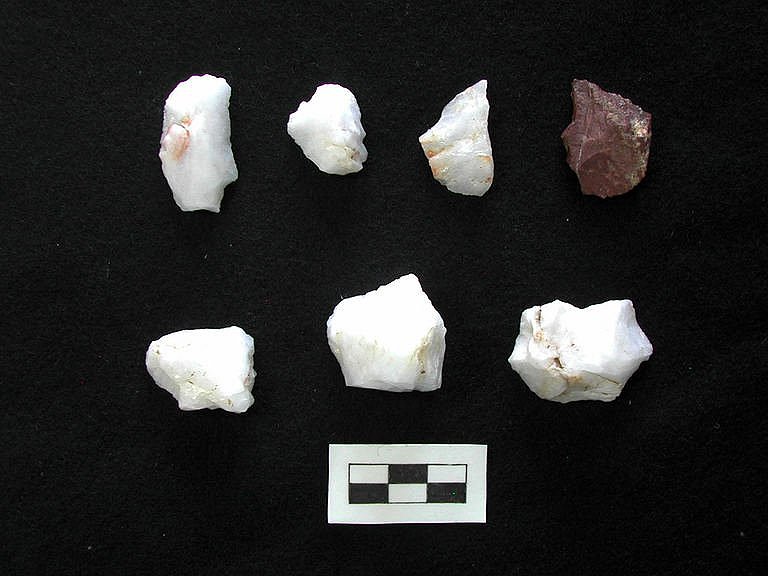
130,000 BCE:
First Signs of
Human Activity on Crete
The first sea-crossing in the Mediterranean was thought to have occurred around 12,000 BCE, but 130,000-year-old stone tools that were discovered during excavations in 2008 and 2009 say otherwise. This means archaic sea-faring humans had been visiting the island far before then. For thousands of years, Crete was ecologically isolated, with only several animals inhabiting it (i.e., dwarf elephant, Cretan owl (Athene cretensis), shrews, otters, and small deer).
7,000 BCE:
Beginning of
Crete’s Neolithic Era
This marks the initial habitation of the island by Anatolian settlers.
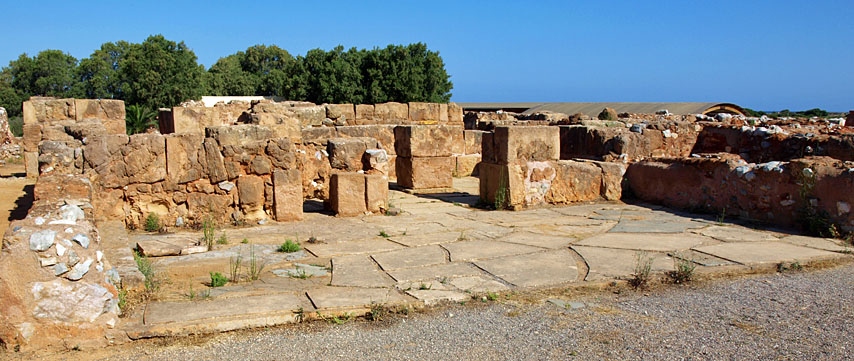
6,000 BCE:
Initial Habitation of Malia
(Neolithic period)
Near a fertile plain on the northern part of the island with its own harbor, it’s no surprise that people gravitated towards this area. Malia later became one of the Minoan civilization’s major settlements.
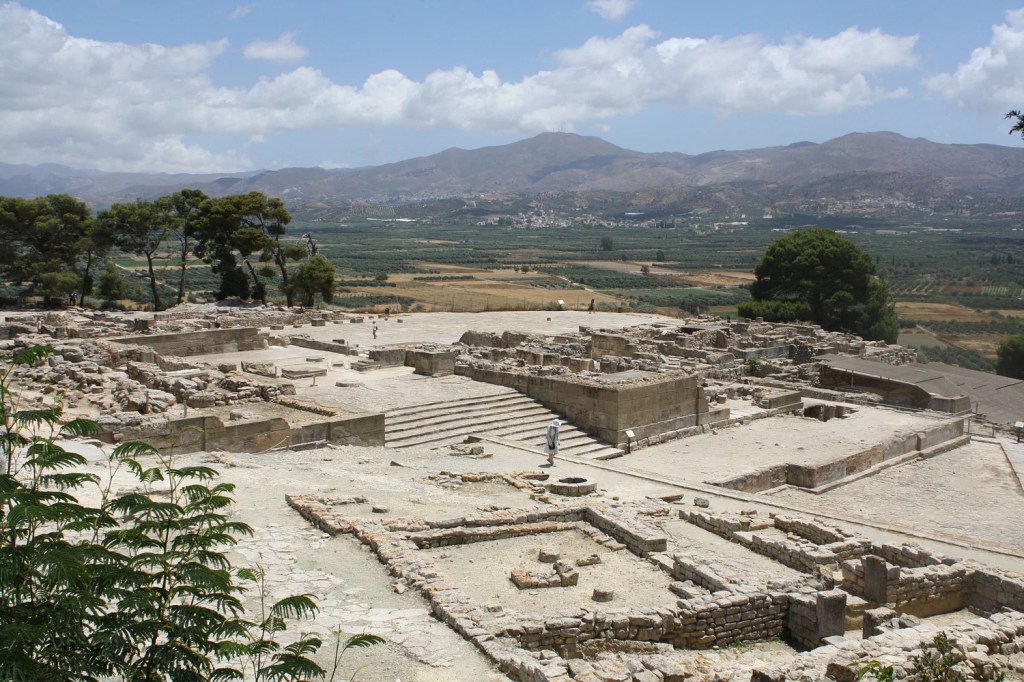
3,600 BCE:
Initial Habitation of Phaistos
Yet another fertile part (the Mesara plain) of the island was inhabited at around this time.
3,000 BCE:
Emergence of Stone Tombs
& Large-Scale Buildings
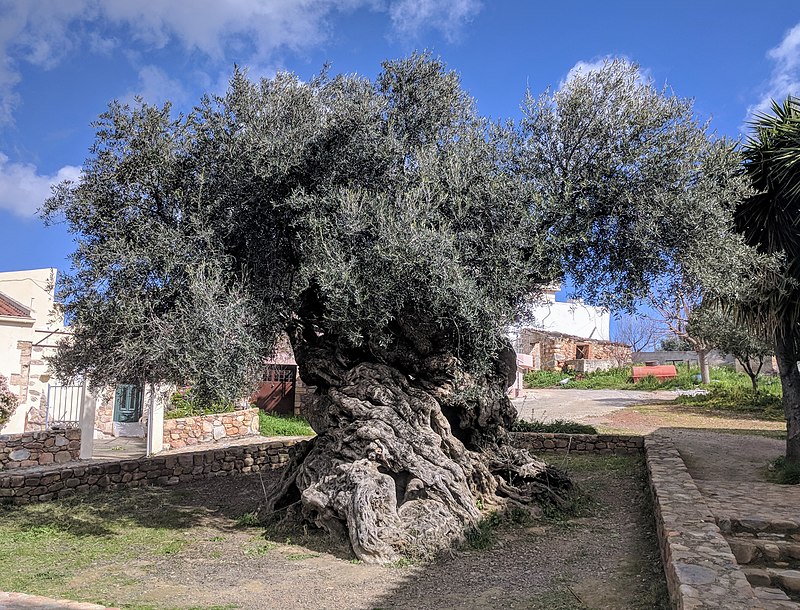
2,700 BCE:
Emergence of Olive Trees
Olive trees were grown and their olives and olive oil were exported. The oldest living olive tree in Crete is The Olive Tree of Vouves, said to be 3,000-4,000 years old!
2,200 BCE:
First Monumental
Architecture at Malia
Initial Malian architecture consisted of a monumentalized court, in an attempt to bring nature-based ritual to an indoor environment.
2,200-1,500 BCE:
Peak of
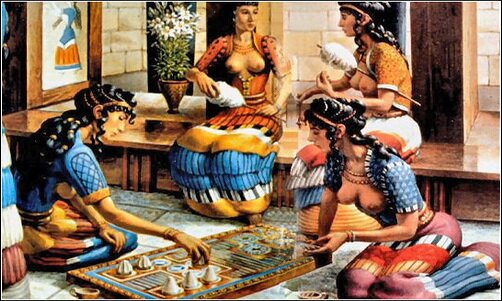
The Minoan Civilization
In this span of nearly a thousand years, the Minoans flourished, and their king established the first-ever navy regionwide.
2,000-1,700 BCE:
Phaistos at
Its Cultural Height
Phaistos was one of the most prominent centers of Minoan civilization. Its first Minoan palaces were built at this time.
2,000-1,450 BCE:
Zakros at
Its Cultural Height
Zakros was enveloped by mountains and situated in a gulf in south-eastern Crete. Again, the fertile land it was upon ensured its prosperity.
2,000 BCE:
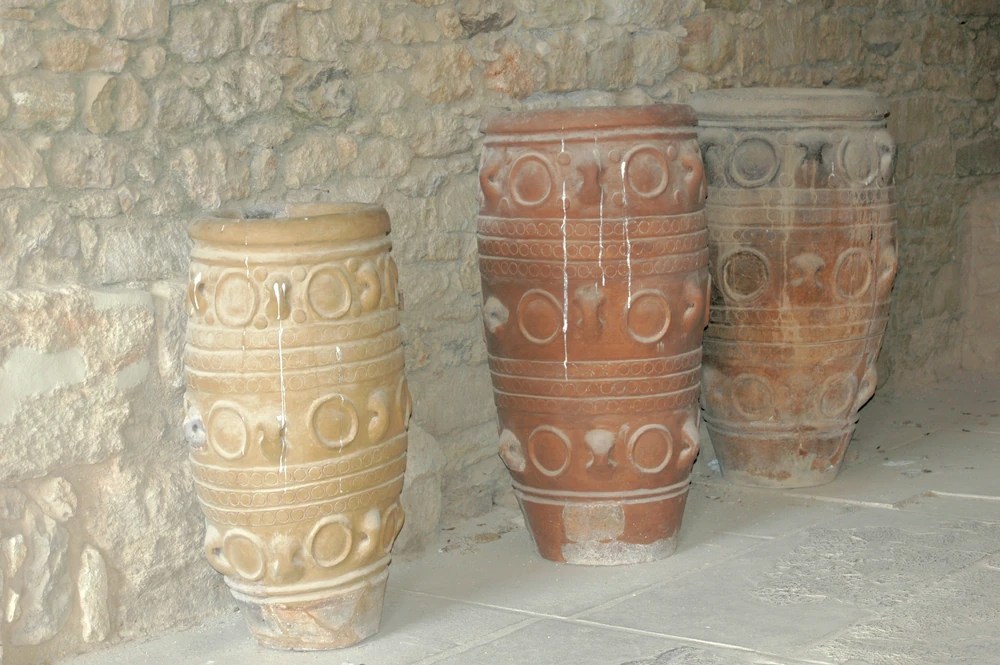
First Pottery Wheel
The introduction of the pottery coincided with the Minoan’s agricultural lifestyle, where robust vessels (i.e., pithoi) were needed.
2,000-1,650 BCE:
Emergence of
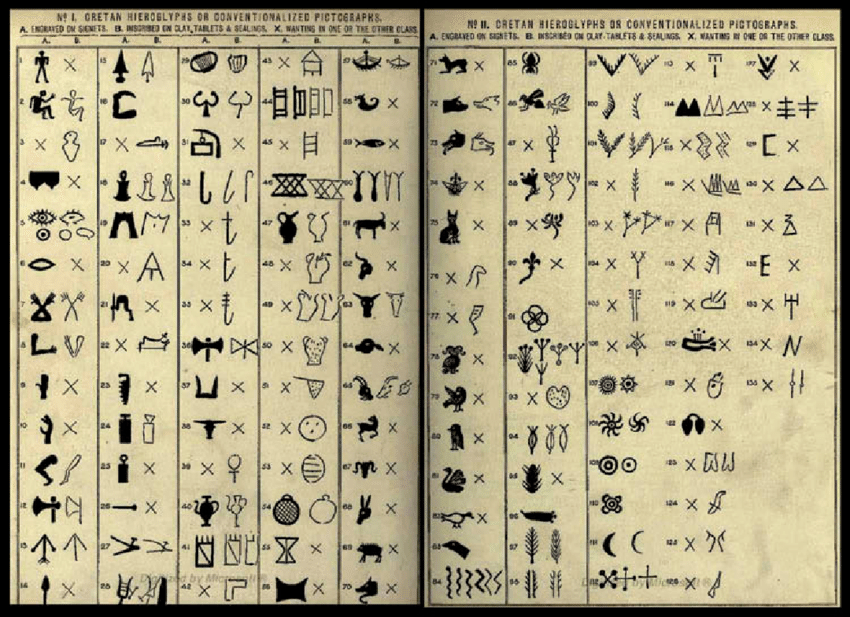
Cretan Hieroglyphic Script
Cretan hieroglyphics are the oldest identified script in Europe and are undeciphered to this day.
1,900 BCE:
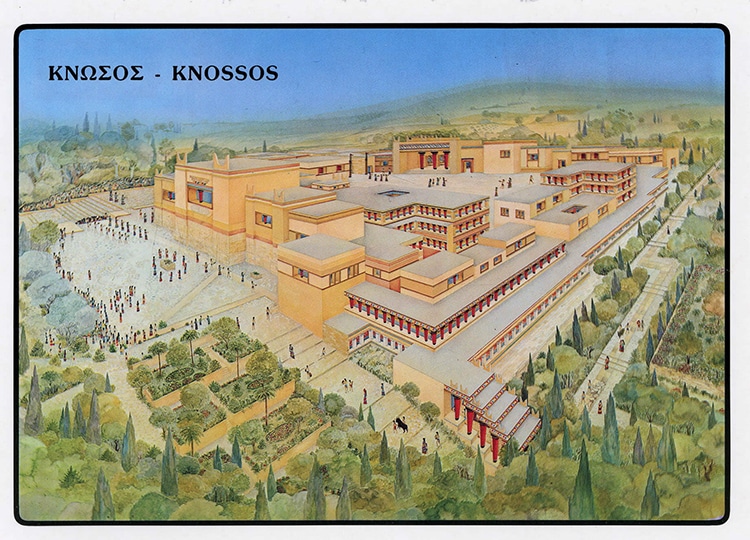
First Minoan Palace
at Knossos
On the outskirts of Heraklion, Knossos was the most prominent site of the Minoan civilization. It is best known as the palace of King Minos and his daughter, Princess Ariadne, as well as the Greek myth of Theseus and the Minotaur. It is one of the most popular tourist attractions in Crete to this day. To see photos I took of the palace, go here.
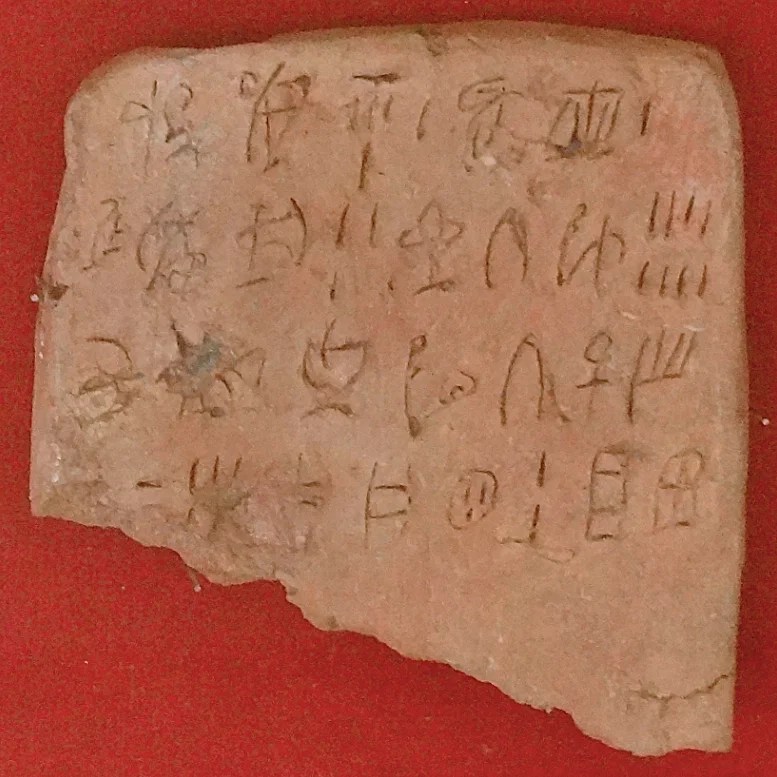
1,850-1,450 BCE:
Emergence
of Linear A Script
Linear A was syllabic Bronze Age script consisting of at least 90 characters and over 800 words. The fact that it was composed of clustered lines in abstract formations has made it almost impossible to decipher. However Linear B, which uses 70% of Linear A’s characters has been deciphered, so that gives linguists hope.
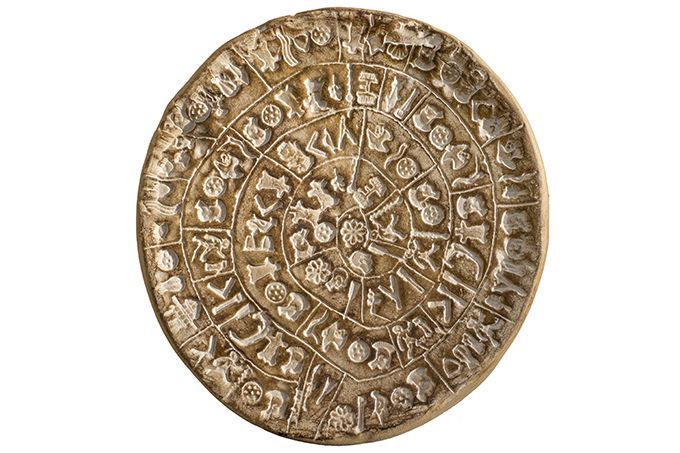
1,850-1,550 BCE:
Creation of
The Phaistos Disk
The Phaistos disk was made of fired clay and engraved with 242 symbols in a spiral formation on both sides. It also remains undeciphered.
1,700 BCE:
Second Phaistosian
& Knossian Palaces
1,675 BCE:
Second Malian Palace
1,600-1,500 BCE:
Knossos Survives
Thera’s Volcanic Eruption & Tsunami
Upon the volcanic explosion at Thera, ash covered most of Crete’s northern coast. Despite surviving the eruption, Knossos lost its momentum thereafter due to damage of trade routes, continual looting, etc.
1,600 BCE:
The Beginning of the End
for Minoan Civilization
While some settlements weren’t entirely decimated, many settlements were. This greatly weakened the Minoans as a whole.
1,450 BCE:
End of Malia’s
Minoan Period
A devastating earthquake and fire brought an untimely end to Malia’s thriving Minoan period.
1,450 BCE:
Destruction of
Zakros’ Minoan Palace
Despite being in a gulf sheltered by mountains, the palace at Zakros wasn’t exempt from damage.
1,450 BCE:
Start of Mycenaean
Influence in Knossos
The Mycenaeans (a civilization from southern mainland Greece) were a more militaristic power and considered a warrior society, mirroring that of The Spartans. As such, they overtook the remaining Minoan settlements. Already weakened by natural disasters, The Minoans were unable to adequately defend themselves.
1,300 BCE:
Abandonment of
Zakros Settlement
1,100 BCE:
The Minoan Civilization’s
Official Demise
The deteriorating economy, dwindling population, and natural disaster aftermath was just too much. At this point, The Mycenaeans took full control of Crete and adopted Minoan culture. In turn, “Mycenaean culture” heavily influenced classical Greek culture. However, their reign over Crete didn’t last long (Mycenaean civilization ended in 1,150 BCE).
700-600 BCE:
Brief Resurgence
of Phaistos
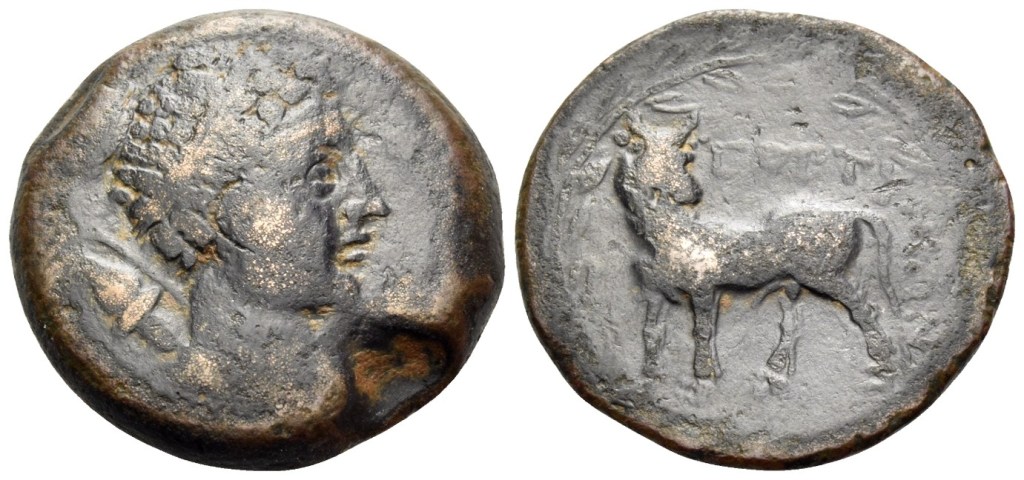
690 BCE:
Introduction of Coinage
Gortyn created its own coinage. Gortyn was a settlement on the Mesara plain of central Crete.
220 BCE:
Gortyn’s Allyship
with Knossos
In order to defeat Lyttos (another ancient Cretan settlement) during the Lyttian War, the two settlements banded together. Knossians took advantage of the Lyttian’s absence due to a distant voyage and caught them by surprise, ultimately bringing them to their demise.
206-204 BCE:
War Between
Crete & Rhodes
180 BCE:
Gortyn Conquers Phaistos
155-153 BCE:
Second War
Between Crete & Rhodes
110 BCE:
Peace Established Between
Warring Cities by Rome
71 BCE:
War Waged by Romans
Against Cretan Pirates
36 BCE:
Crete Gifted to
Cleopatra by Mark Antony
60 CE:
Emergence of Christianity
in Crete (Gortyn)
395 CE:
Crete Conquered by
The Byzantine Empire
*Photos from Wikimedia Commons unless otherwise specified, and I used info from WorldHistory.org to construct the timeline.
Minos Kalokairinos: The Original Excavator of Knossos
Arthur Evans tends to be the first name that comes to mind when one thinks of Knossos and its initial discovery and excavation. However, the original excavator is less widely known. His name? Minos Kalokairinos (yes, Minos!), a so-called novice archeologist, businessman, lifelong student, and antiquarian. That being said, the first excavation of this ancient Cretan site took place in 1878, not 1900 (by a Cretan person no less).
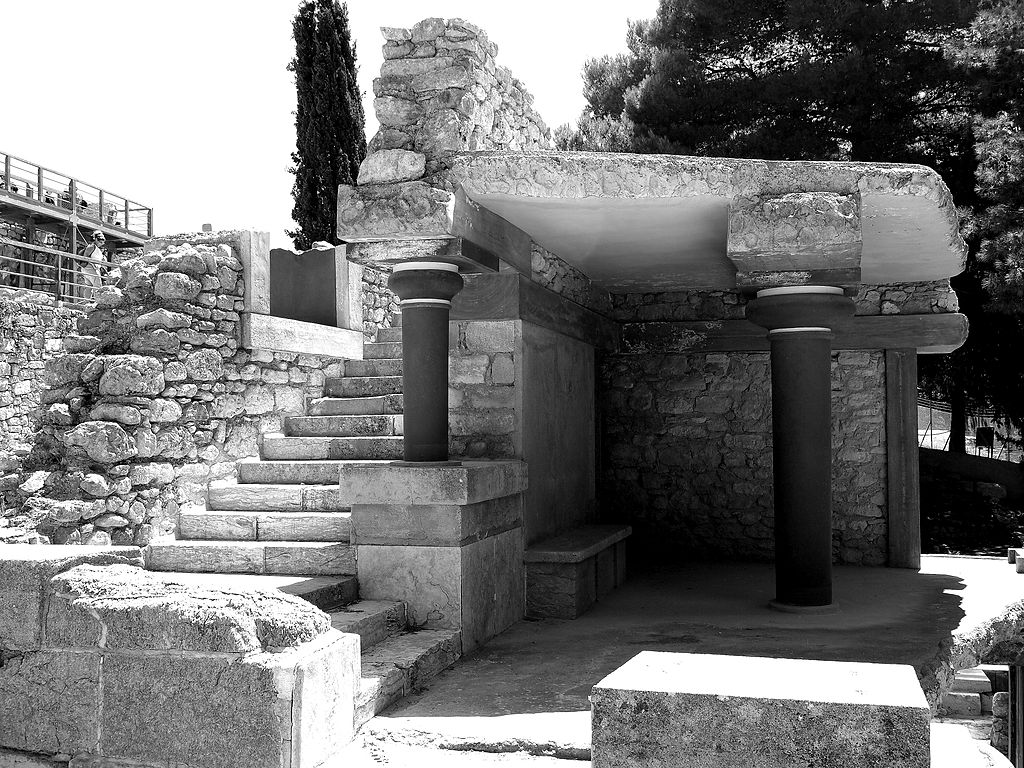
Minos Kalokairinos, The Palace of Minos: Mere Coincidence or Fate?
Not to get too poetic about it, but I do find it interesting that Minos shares the name of the legendary king Minos, which the Minoan civilization was named after (by Evans). Also, he was the first person to pin down the location of the Minoan ruler’s palace (also known as the Knossian Labyrinth). It’s far too synchronistic, if you ask me…
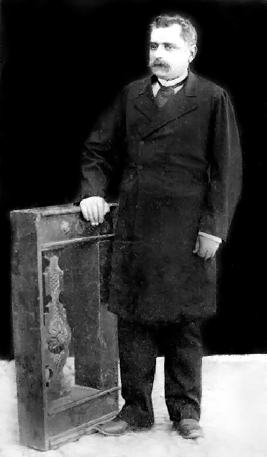
The Life of Minos Kalokairinos (Μίνως Καλοκαιρινός)
Born back in 1843 on the island of Crete in Heraklion, Minos was the son of an affluent landowner named Andreas Kalokairinos (he actually owned the Knossos site). Following in father’s footsteps, his life was a balancing act between entrepreneur and scholar.
Academic Pursuits
Minos pursued his secondary education at Syrus, followed by a law degree at the University of Athens, which was short-lived. A year into the program, his father passed away from a serious illness. From there, he and his brother Lysimachus took over the family business until 1871. Eventually, his unwavering entrepreneurial spirit led him to soap manufacturing at an award-winning level. Alas, that was also short-lived when he became bankrupt. Thankfully, he would later oscillate back to his scholarly endeavors to continue his studies, which would lead to a degree.
May the Excavations Begin!
During 1878, Minos embarked upon quite a feat: the initial Knossos excavations! However, he would only be entitled to a third of the findings because two other individuals already owned the site. This primary excavation spanned the course of nearly a month and comprised the Royal Palace complex, namely the west and south wings.
Another Roadblock
However, the political situation at hand at the time had other plans (Crete was under Turkish occupation). Less than a year later, Fotiadis Pasha (the Christian Commander of Crete) visited the site to check on their progress. Unfortunately, he and the city’s scholars came to a unanimous decision to halt the excavations right then and there, in the name of protecting the findings.
Shaken But Tenacious
Even still, Minos was deeply passionate about this ancient palace and dreamed of making Knossos the talk of the world. So, he discretely escorted various archaeologists, diplomats, etc. at Knossos and showed off his private collection. By 1886, famous German archeologist Heinrich Schliemann (the one who discovered Troy) paid Minos and the site a visit. That alone could have changed everything, but continued excavations were still forbidden.
The Second Excavator Takes Over as The First Bows Out
A pivotal moment came in 1894, when Sir Arthur Evans arrived to survey the site for himself. Immediately in awe, he purchased a fourth of Kephala Hill. Six years later, the excavations officially started back up again. The exact date? March 23rd 1900, the date most are familiar with and reference when it comes to the “first” Knossian excavation.
The Throne Room was first in line, and in two years’ time, the entirety of Knossos was dug out of the pervasive ash. This was certainly a groundbreaking time, but alas, Minos retired due to tragedies that befell him and his loved ones. Long story short, a vast genocide of civilians by the Turks in 1898 took the life of his beloved brother Lysimachus and son. His niece also went missing. And if that wasn’t horrific enough, his home was set ablaze, his precious collection of artifacts and all.
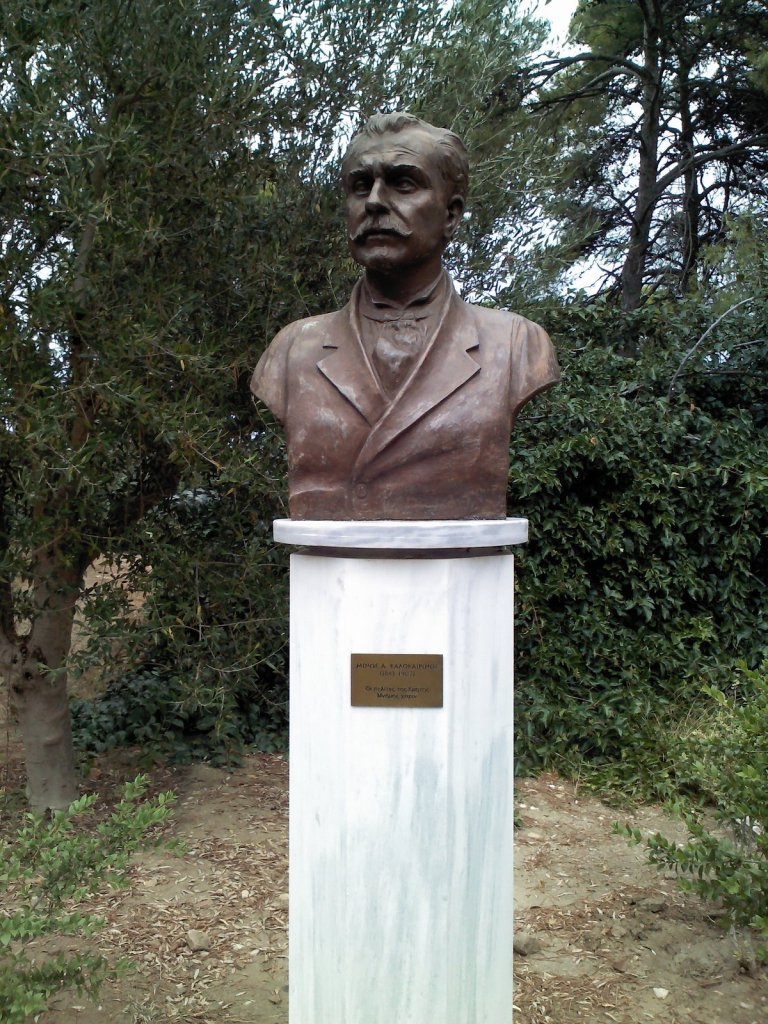
Minos’ Legacy Lives On
However, all hope was not lost. In 1903, Minos’ nephew built a new mansion. To this day, this mansion is home to the Historical Museum of Heraklion. And prior to Minos’ passing in 1907 (on an island no longer under the Ottoman Empire’s rule), he had the opportunity to publish a journal primarily dedicated to Knossos called the “Cretan Archaeological Ephemeris”.
And while that house fire destroyed many of his findings, Minos fortunately had quite an extensive assemblage of artifacts. The amphorae found in Knossos’ western wing were donated to Greek museums and beyond to garner global intrigue.
It is Μίνως Καλοκαιρινός’ initial explorations and discoveries that led to those major excavations that revealed an expansive and elaborate palace of ancient times to the world. That is a fact that should never be overlooked! He may have not had to opportunity to see things through until the end, but his contribution to Crete’s rich history will have an enduring ripple effect.
Sources
Kotsonas, A. (2016). GREEK AND ROMAN KNOSSOS: THE PIONEERING INVESTIGATIONS OF MINOS KALOKAIRINOS. The Annual of the British School at Athens,111, 299-324
Municipality of Heraklion: Knossos
Μίνωας Καλοκαιρινός: Ο άνθρωπος που οδήγησε τα βήματα του Έβανς
 Minoan Mystic