Minoan Mantinada of the Month / Μινωική Μαντινάδα της του Μήνα #1: An Aspiring Sailor’s Dream

Today, I’m starting a series called Minoan Mantinada of the Month, where I’ll share a Minoan-inspired mantinada in both Greek and English at the start of each month (alliteration semi-intended). I’ll implement the Cretan Greek dialect at times, but because I’m fairly rusty, that won’t always be the case. I figure it’s a unique way to get a glimpse of Minoan life that unites the ancient and modern Cretan cultures.

A mantinada (μαντινάδα: “morning song”) is a Cretan-style folk poem that’s usually recited with the backing of a lyra or laouto. It’s comprised of a rhyming couplet with two 15-syllable lines. However, I’ll be writing the English translation in 10-syllable lines to avoid overly long lines. And it’s important to know that the meaning may vary a bit due to translation limitations while also needing to adhere to a rhyme.

Original Greek Version:

Δελφίνια με συνοδεύουν και ο Νότος ευλογεί
το μοναδικό μου όνειρο από μικρό παιδί:

να σύρω τα δυό μου πόδια στις ακτές της Αιγύπτου
αν η Θεά το επιτρέψει, όπως τον μπαμπά μου.

Transliteration:

Delfínia me synodévoun kai o Nótos evlogeí
to monadikó mou óneiro apó mikró paidí:

na sýro ta dyó mou pódia stis aktés tis Aigýptou
an i Theá to epitrépsei, ópos ton babá mou.

English Translation:

Dolphins escort me and Notos (south wind) decrees
my one and only childhood reverie:

for these two soles to tread on Egypt’s sand,
if Goddess wills it, just as my dad had.
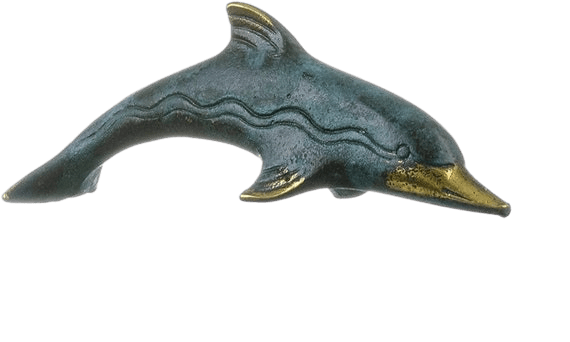
Note: This Cretan folk poem is about a Minoan sailor’s first time at sea on his first trade expedition who always dreamed of what Egypt would be like. He is so eager that it feels like both the sea creatures and wind are conspiring for him (and hopefully the Goddess too). He is honored to walk in his father’s footsteps and feels closer to him as a result.
The Flowery Childhood of The Lily Prince (a poem) 𓆸


a Minoan-inspired poetic story about how The Lily Prince got his name


Soon after he took his initial steps,
his heart was drawn to the coast at sunset
bedecked with rosen cumulus clouds.
The seagulls’1 elegiac yeows
set to the Aegean’s sonorous symphony—
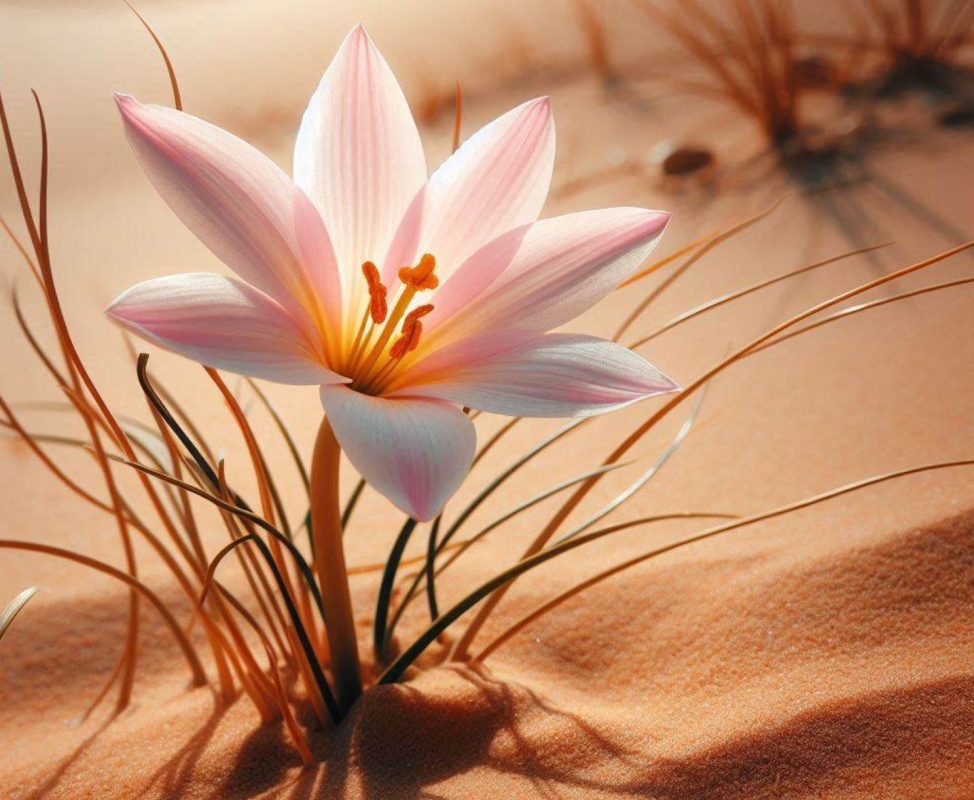
all served as an invitation from the sand lilies2.

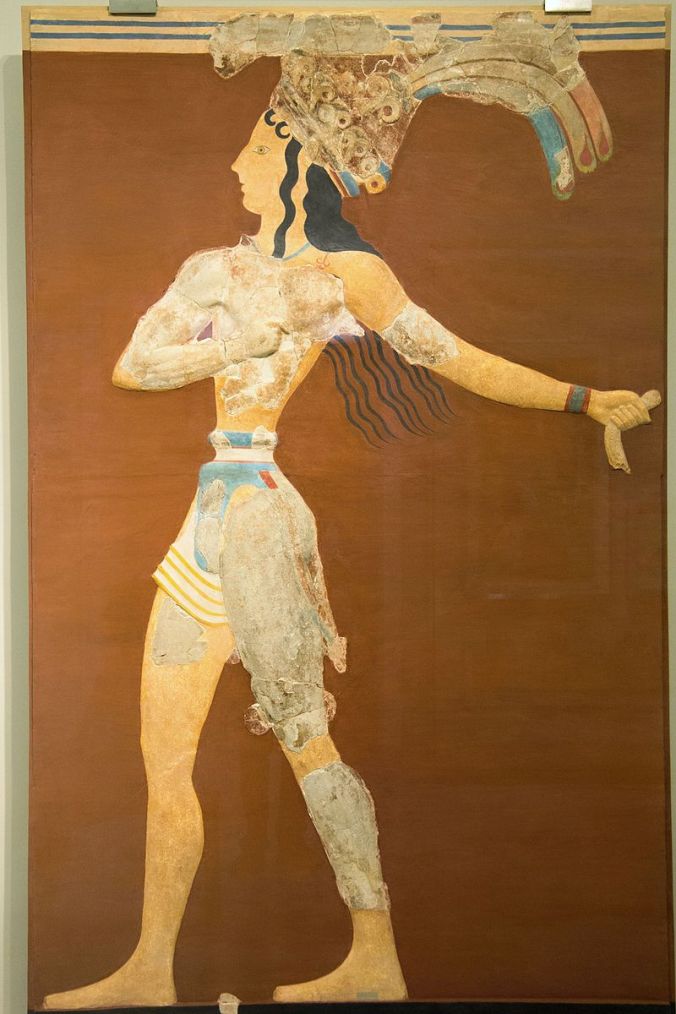
Prince of the Lilies Reconstruction from Original Fragments


So, the young wide-eyed prince wandered off
every opportune moment he got
to inhale the warm salted air
sweetened by the flowers’ subtle flair.

But it wasn’t long before his mother caught up
and urged him to return with her to the palace at once.
And he would oblige, for he was the Wanax’s3 son,
but not before he picked her the most vibrant one.

Cretan sand lily from Wikimedia Commons


P.S. You’ll be seeing quite a bit of Minoan-inspired poems from me this month because it’s National Poetry Month/NaPoWriMo. 😀

  1. Seabirds of the genus Larus were likely present in ancient Crete. ↩︎
  2. Also known as a sea daffodil or sea lily (Pancratium maritimum), the sand lily is native to Crete and has been around since prehistoric times, with the Minoans depicting it in their art. ↩︎
  3. “king” in Mycenaean Greek (pronounced as wa-na-ka in Linear B). While not directly associated with Minoan rulers, there is evidence of kings in Minoan Crete, but there is no known word for them. ↩︎

Minoan Spring (a poem)

a researched poem about the vernal equinox in Ancient Crete

Warm westerly winds replace the biting gales of the north.
Crocus, poppy, and lily saplings slowly spring forth.
Rainy season makes its anticipated exodus as March wanes,
the sunshine igniting a mountainous scene amidst flowery plains.

The Mother Goddess’ blessings are ever-bountiful,
and so, her devotees honor her with a vibrant spring festival
brimming with offerings, worship, sacrifices, and ecstatic dance
to ensure another year of fertility, flourishment, and favorable circumstance.

In the sustained daylight and deep into the night,
they jubilantly celebrate the cyclical rhythms of life
and their spiritual ties to the natural world—
whether olive, boar or bee, existence ebbs and unfurls.

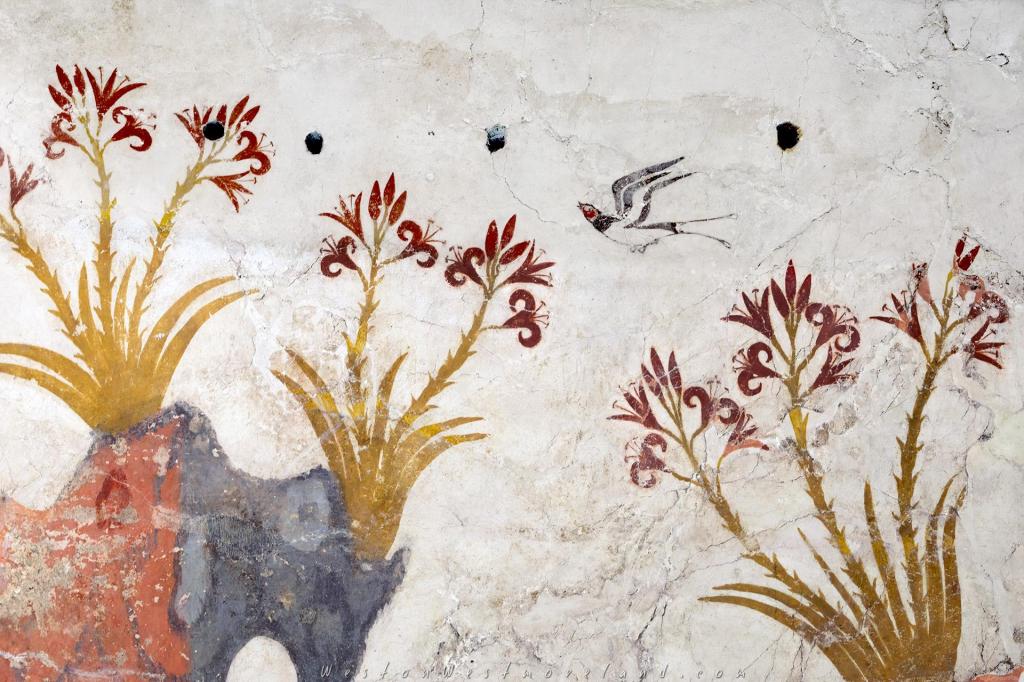
a close-up of the Spring Fresco from Akrokriti, depicting a rocky landscape with lilies and swallows